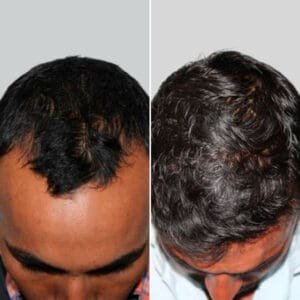
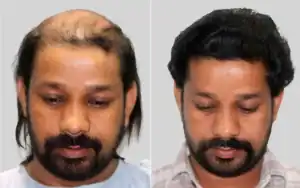
Non-surgical methods for hair restoration have garnered significant interest in the fast-paced realm of regenerative medicine. Among these methods, Platelet-Rich Plasma (PRP) and Growth Factor Concentrate (GFC) therapies are viewed as two of the key procedures that can reinvigorate hair growth by harnessing the body’s natural healing capabilities.
This article offers a comprehensive look at PRP and GFC hair treatments, exploring their mechanisms, advantages, appropriateness for various patients, and the elements that affect their outcomes.
Cost: PRP vs. GFC
When deciding between PRP and GFC treatments, the majority of patients consider treatment costs. The prp and gfc treatment cost in Chennai can change depending on a number of variables. These treatments typically cost between INR 4,000 and INR 10,000 each session.
One comparative advantage of PRP treatment over GFC is its cost-effectiveness for hair. The prp treatment for hair cost is comparatively lower because the method of plasma extraction and concentration is well-established and generally accessible.
Because a more complicated procedure is required to extract a higher concentration of growth factors, GFC hair treatment is typically more costly.
What Is PRP Hair Treatment?
PRP, a well-liked regeneration method, is made by taking a little sample of the patient’s blood and spinning it in a centrifuge to extract the platelet-rich plasma. Growth factors essential for tissue healing, collagen synthesis, and cell regeneration are present in the loaded platelets.
Once prepared, the PRP is injected into the scalp at the level of the hair follicles. This procedure’s main objective is to stimulate dormant hair follicles, promote the formation of new cells, and eventually aid in hair regrowth. The procedure greatly lowers the chance of allergic reactions or compatibility problems because it uses the patient’s own blood.
Key Advantages of PRP Treatment
PRP emphasises the body’s natural capacity for healing. It boosts the growth of new hair and promotes the natural regeneration of hair follicles.
- Because there are no surgical incisions made, the patient can heal really quickly and with little discomfort.
- PRP can be used to treat a variety of hair loss disorders by combining it with other treatments for increased efficacy.
- The treatment is entirely safe because there is very little possibility of any form of negative reaction because it uses the patient’s blood.
What is GFC Hair Treatment?
Another recent advancement in hair restoration is Growth Factor Concentrate, or GFC. The GFC technique requires taking the patient’s blood, just like PRP. This procedure, however, focusses on separating a greater blood concentration of growth factors. Growth factors are crucial proteins that support tissue healing, cell differentiation, and growth.
The concentrated growth factors are carefully injected into the scalp during the GFC treatment, specifically targeting the hair follicles. In addition to preventing hair loss, the therapy thickens existing hair strands and promotes the growth of new hair.
A purer concentration of growth-promoting components is made possible by the refined procedure employed in GFC treatments, which guarantees that the solution is free of any extraneous blood cells.
Benefits GFC Treatment offers
Because GFC is made with more growth factors than PRP, it may promote more robust hair regrowth.
- The GFC treatment strategy focuses on follicles, giving them a robust blood supply and vital nutrients to get hair ready for a growth phase.
- By balancing sebum production and reducing inflammation, concentrated growth factor injections can improve the environment for hair development.
- Compared to PRP, patients may frequently see noticeable improvements in fewer treatment sessions.
Comparing the Benefits: PRP vs. GFC
It is useful to go over a number of topics when comparing PRP and GFC treatments, including growth factor kinds, the number of sessions required to achieve the best results, and their practical efficacy.
Benefits of PRP Treatment
- It stimulates the creation of new hair strands and activates the hair follicles.
- Although it is beneficial for ladies with hair loss, the medication is primarily used for male androgenetic alopecia sufferers.
- For many individuals, this is a safer choice because no surgical incisions are needed.
- PRP is typically used as an adjuvant treatment to enhance the outcomes of other medications or therapies.
Benefits of GFC Therapy
- Growth factors are administered in strong doses during GFC treatments, which may greatly stimulate the hair follicles.
- Because of its concentrated formulation, GFC frequently produces apparent benefits in fewer sessions than PRP.
- By lowering inflammation and an imbalance in sebum production, the growth factors in GFC enhance scalp health and encourage hair regrowth.
- GFC offers universal applicability to different patterns of hair loss and is suitable for both men and women.
Who would be ideal candidates for both PRP and GFC?
For people who have hair loss, both PRP and GFC therapies have great potential; nonetheless, each is best suited to a certain patient’s condition and medical background.
PRP Candidate Criteria
PRP therapy often works well for people with a high density of hair follicles. A person may not be the greatest candidate if they have certain conditions, such as: Any active scalp infection could make the treatment less effective.
- People with autoimmune illnesses may experience a reduction in the effects of PRP.
- Reduced efficiency would be the outcome of a condition with insufficient platelets.
- Individuals with these long-term liver and skin disorders may interfere with the body’s ability to produce and use growth factors.
- Blood Disorders with Coagulopathy: If a person has a condition that causes incorrect coagulation, PRP is not recommended.
GFC Candidate Criteria
Since GFC therapy only concentrates and extracts growth factors, excluding other components of blood cells, it is generally well tolerated by most patients. It is frequently advised for:
- GFC works well for hair loss in both men and women.
- Patients with sebum production abnormalities or irritation of the scalp may benefit more.
- The concentrated growth elements that promote hair development will aid some people with alopecia.
For both PRP and GFC, a proper consultation with a hair restoration specialist is required to ascertain whether either, both, or a combination of both treatments will be the best course of action for each individual situation.
Treatment Sessions and Expected Outcomes
The severity of hair loss and individual instances determine the frequency and length of therapy sessions.
PRP Treatment Sessions
- Multiple Sessions: By the third session, patients see noticeable improvements.
- Interval Spacing: The sessions take place every five to six weeks.
- Maintenance: To sustain the outcomes, monthly follow-up maintenance sessions are required.
GFC Treatment Sessions
- Less Sessions Required: With fewer GFC sessions, the high concentration of growth factors may produce more notable outcomes.
- Quick Outcomes: High success rates were found in a number of investigations; almost 83% of the patients attained the intended result faster.
- Duration: Depending on the patient’s age, level of hair loss, and general health, the impact will last as long as PRP.
It is important to note that while both treatments have the potential to produce long-term effects, their effectiveness may vary. The main factors influencing the effectiveness of any hair restoration treatment are diet, lifestyle, and the cause of hair loss.
Which Treatment is Superior?
Whether PRP or GFC is better is a difficult choice to make. Each has some advantages over the other, and which is preferable will depend on the needs and circumstances of the individual. Here are some last things to think about:
PRP Hair Treatment:
This technique is highly acclaimed since it uses the patient’s own plasma to organically stimulate hair follicles. It is frequently used as a first-line treatment for both men and women who are experiencing early hair loss because it is minimally intrusive and has a low risk of negative side effects. It is a well-liked option among dermatologists because of its documented success and price.
GFC Hair Treatment:
Growth factors may be more concentrated in GFC, which could lead to faster and more noticeable outcomes. People who want better improvements in fewer sessions or who have only seen limited outcomes with PRP find the treatment more appealing. Because of this sophisticated method of GFC, patients can benefit from increased stimulation of their hair follicles and improved scalp health at a higher cost.
Conclusion
The concept of non-surgical hair regrowth was revolutionised by PRP and GFC hair treatments. Many people who are experiencing hair loss find hope in these treatments. Because PRP is minimally invasive and has natural regenerating properties, it is the most widely used treatment for thinning hair worldwide. However, GFC offers a viable substitute for quicker and more noticeable results because of its higher concentration of growth factors and effectiveness in fewer sessions.
In conclusion, there isn’t a universally applicable solution to the question of whether PRP or GFC is superior. Each treatment has advantages, and the best option is determined by a mix of medical advice, patient-specific considerations, and personal objectives. You can start a successful hair restoration journey and get the desired natural, fuller hair by being informed and collaborating closely with a professional.