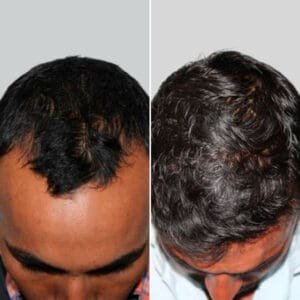
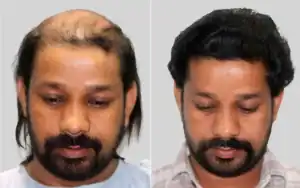
Significance of Hair Transplantation Before Marriage
Indian weddings are a culturally rich event, which observe the gathering of hundreds of people and multiple social rituals to be performed by both the families. Most men are conscious of how they look due to evolving social norms. The constant emphasis on pictures being worthy of social media adds to the need. Hair is a very significant part indicating youth and attractiveness for men. While male pattern baldness is a very common problem across the world, hair transplants are becoming increasingly popular among Indian grooms.
Hair transplants help in enhancing the self-confidence of men during wedding functions while they perform a plethora of social rituals. They help in aligning the physical appearance of men with the bride. Apart from this, hair transplants reduce the chances of unsolicited advice a man may get from relatives about male pattern baldness.
Understanding the Hair Transplantation Procedure
A surgical technique to move the hair follicles from a part of the body known as the donor site to the balding or thinning area or recipient site is known as the hair transplantation technique. Here is a list of different steps of the hair transplantation procedure to give an overall view of the process.
- An examination is conducted by a hair transplantation surgeon or dermatologist to assess the current condition of the patient. Along with this, the doctors also examine the health and availability of grafts from the donor area and create a personalized hairline design to match the symmetry of the face.
- After the initial consultation and scalp analysis, blood tests are conducted by doctors to assess the underlying health conditions of the patient. Post that, the donor and recipient areas are shaved or trimmed and pre-operative photos are taken for documentation and planning.
- For the surgery, local anaesthesia is administered to both the donor and recipient sites of the patient for hair transplantation surgery.
- The extraction of hair follicles occurs by two different techniques. Extraction of individual follicular units using a micro punch tool and storing the grafts in a storage solution is done in the follicular unit extraction method. It is a quick technique that leaves no linear scars. On the other hand, removal of a strip of hair from the donor area using dissection technique and closing the donor area with sutures or stapler after transplantation is done in follicular unit transplantation. This technique offers the advantage of more grafts being harvested in a single sitting.
- The recipient site is prepared by making small incisions in the bald areas where grafts can be implanted by the surgeon based on the angle and direction required.
- After that, the harvested grafts are carefully implanted into the tiny incisions, and the scalp is cleaned and bandaged.
- Post-operation, medication and instructions are provided by the doctors.
Time Frame for Hair Transplantation Before Marriage
It is essential to note that hair transplantation does not give immediate results. Since it is a gradual process, understanding the timing is crucial for Indian men looking to get a hair transplantation surgery before marriage.
After the hair transplantation procedure, redness, temporary shedding, and scabbing may be present in the transplanted hair in the first month. Minimal growth would occur in the subsequent 2 to 3 months after the hair transplantation. After that, noticeable growth of hair will begin 4 to 9 months after the hair transplantation surgery. Full and final results may take up to 12 months to appear. That is why it is essential to do the math for the timeline between hair transplantation surgery and the time of the wedding. After the initial recovery phase, doctors will advise you to use mild and non-abrasive shampoo and conditioner for washing the transplanted hair. It is also important to protect the scalp from excessive and prolonged sun exposure, as the newly transplanted follicles remain sensitive for several months. In addition to these care instructions, regular follow-up appointments with the medical team are crucial. These check-ups help monitor your progress, detect any early complications, and ensure optimal long-term results from the hair transplantation procedure.
Pros and Cons of Hair Transplantation Procedure
To make an informed decision, understanding the pros and cons of the hair transplantation surgery is crucial.
Pros of Hair Transplantation Procedure
- Hair transplantation serves as a permanent solution to resist balding and overcome the male pattern baldness problem.
- When performed by skilled and experienced surgeons, the results after the surgery are brilliant, mimicking the natural growth of hair.
- Above everything, hair transplantation helps in improving the self-esteem and confidence of men before important events, such as a mega wedding.
- Hair transplantation is a cost-effective solution based on a long-term perspective.
Cons of Hair Transplantation Procedure
- Depending on the location, patient condition, and reputation of the surgeon, hair transplantation can be costly initially.
- If post-care is not followed after the surgery, the risk of redness, swelling, and infection is always there.
- While it is a permanent solution, the non-transplanted hair may get thin over time requiring a few additional procedures for their correction.
Post-operative Instructions After Hair Transplantation
Some of the post-operative instructions that can help in enhancing the output of the hair transplantation are listed below:
- Immediately after the hair transplantation procedure, for the initial few days, it is required to avoid touching or scratching the grafted area. Doctors recommend not washing the scalp unless advised, and to always use the prescribed spray or solution as directed by the doctors. Along with this, excessive and prolonged exposure to sun and sweating must be avoided.
- In 2 to 4 weeks after the hair transplantation procedure, individuals can resume light physical activity. Usually, it is advised not to wear hats or helmets and not to pick at the scabs, let them fall off naturally.
- After a month, a normal hair care routine can be continued by the patients.
Frequently Asked Questions (FAQs)
As the procedure of hair transplantation is performed under local anaesthesia, the patients experience minimal pain during the surgery. Post-operative soreness and mild discomfort may be present, which can be easily managed with medication prescribed by the doctor.
While it is a permanent solution, the non-transplanted hair may get thin over time requiring a few additional procedures for their correction.
Intense exercise, consumption of alcohol and cigarettes, exposure to sun for prolonged periods of time, and swimming for at least three weeks must be avoided after the hair transplantation procedure.
The new-age advanced techniques help in providing a very natural-looking and undetectable hair transplantation. That is why it is crucial to opt for skilled surgeons who will help in careful planning of the hair transplantation.
Absolutely. Weather conditions do not significantly impact the hair transplantation procedure as long as the patient follows post-operative care instructions diligently.
The amount of grafts required is directly related to the extent of hair loss and desired density of the patient. A typical hair transplantation requires somewhere between 1500 to 3000 grafts after consulting with the surgeon before surgery.
Yes, after the hair has grown properly, it can be treated as natural hair and can be coloured and styled freely.
When performed by a skilled and experienced surgeon, hair transplants have a success rate of over 90% in terms of regrowth of the hair and survival of the grafts that are implanted during the surgery. However, it is crucial to note that proper aftercare is required for sustained results.