Hair transplant surgeries have become one of the most effective solutions for treating hair loss and baldness, especially among individuals seeking long-term, natural results. While the hair transplant offers promising outcomes, many surgeons now incorporate Platelet-rich Plasma (PRP) therapy to accelerate healing and enhance the success of the transplant.
In this blog post, we will explore the role of PRP in post-transplant care, its benefits, potential risks, and whether it is essential for achieving optimal hair transplant results.
What Is PRP (Platelet-rich Plasma) Therapy?
Platelet-rich plasma (PRP) is a non-invasive regenerative medical treatment derived from the patient’s own blood. It is an effective solution for individuals who are experiencing hair thinning, androgenic alopecia, or hair loss due to stress and underlying medical conditions.
It may be used as a standalone treatment or in combination with other hair restoration procedures.
It is made of two elements, i.e plasma, or the liquid portion of the blood, and platelets that play an important role in healing.
Platelets are rich in growth factors, including PDGF (Platelet-Derived Growth Factor), VEGF (Vascular Endothelial Growth Factor), and TGF (Transforming Growth Factor), that may support tissue repair, cell regeneration, and reduction of inflammation.
How Is PRP Therapy Performed?
The PRP hair therapy process includes
- Clinicians draw blood from the patient
- The blood is placed into a device called a centrifuge that rapidly spins the sample, separating out the other components of the blood from the platelets. The platelet-rich plasma is then extracted.
- The platelet-rich plasma is then injected into areas of the scalp where hair growth needs to be accelerated.
The procedure may last about 30-45 minutes and does not require any recovery time. Typically, about 3-6 PRP sessions are recommended after hair transplant spaced about a month apart, for optimal results.
Role of PRP After Hair Transplantation
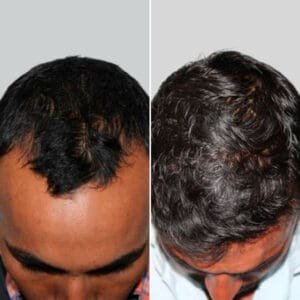
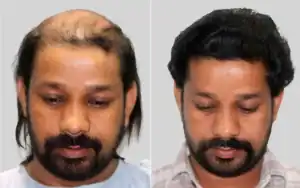
The mechanisms behind PRP injections are not completely understood. Hair transplantation repositions healthy hair follicles into bald or thinning areas and PRP acts as a booster to speed up recovery and improve the quality and density of the new hair.
The available studies have shown that increased concentration of growth factors in PRP may
- Accelerate tissue healing
- Reduce inflammation
- Improve blood supply to the grafted area
- Prevent temporary post-surgical hair loss.
Though not completely mandatory after a hair transplant, PRP therapy may act as a powerful supplement to maximize the effectiveness of a hair transplant, especially in the initial few months.
Future research studies are required to optimize the use of PRP after a hair transplant in promoting hair growth.
Benefits Of PRP After A Hair Transplant
Regular PRP sessions after the hair transplant may prevent thinning and enhance the hair quality over time. The main reasons for PRP after a hair transplant include
- Faster healing and reduced recovery time
PRP has growth factors that accelerate the repair of tissues. It may result in reduced redness and inflammation.
- Provides nourishment
PRP provides vital growth factors for the hair roots and a robust blood supply to the grafts. It helps the transplanted follicles establish and thrive.
- Prevents shock loss and damage to existing hair follicles
The transplanted and native hair may shed temporarily after the hair transplant
procedure, called shock loss. PRP helps strengthen surrounding follicles and prevent shock loss.
- Higher rate of graft survival
PRP may enhance the blood supply and nutrient delivery to the transplanted follicles, thereby increasing their chances of survival and reducing graft loss.
- Improved hair quality and density
PRP therapy will strengthen the new grafts and the existing hair over time, resulting in increased hair density and scalp condition.
Factors Affecting PRP Response After A Hair Transplant
The response to PRP treatment in hair transplantation may vary among individuals depending on the individual’s diet, exercise, and lifestyle choices. Hormonal imbalances may affect the response of individuals to PRP.
- Age: Younger individuals may have better responses as their hair follicles are more responsive to growth factors.
- Severity of hair loss: Early stage hair loss may respond better compared to advanced stages.
- Underlying conditions: PRP may not respond to the hair loss associated with other medical conditions.
PRP Post-Treatment Guidelines
After PRP therapy, you may experience temporary redness or tenderness that will subside within a few hours. It is recommended to
- Avoid washing the hair for 24 hours after the treatment and follow the post-care instructions provided by their healthcare provider.
- Refrain from touching or scratching the treated area
- Avoid direct sun exposure, swimming, and intense physical activity for 24-48 hours
- Avoid using hair styling products
- Follow all post-care instructions provided by the surgeon
You may notice visible hair thickening after three to six months of treatment. However, the time may vary depending on the severity of the condition
Risks And Side Effects Of PRP After Hair Transplant
A PRP injection is a low-risk procedure as it uses your own blood and does not usually cause major side effects. However, like any injection-based treatment, it may involve mild side effects, including
- Temporary redness, swelling, pain or discomfort at injection sites
- Scalp tenderness or tightness
- Minor bruising
- Headache or dizziness
These side effects are usually mild and resolve on its won within a few days.
Less common risks of PRP injections include
- Bleeding
- Tissue damage
- Infection
- Nerve injuries
Conclusion
PRP therapy is not strictly necessary after a hair transplant. However, many surgeons recommend it after the hair transplant as it offers numerous advantages that may improve healing and hair density and growth. Therefore, PRP therapy may help in maximizing the success of the hair transplant and encouraging healthy hair regrowth.
If you are struggling with hair loss and considering hair transplant surgery and PRP therapy after the hair transplant in Jaipur, then consider booking a consultation with ALCS Clinic.
At ALCS Clinic in Jaipur, Dr Sunil Arora, with extensive experience in hair transplantation, offers tailored PRP treatment plans suitable for your hair transplants. With cutting-edge technology, a patient-centric approach, and affordability, ALCS Clinic ensures the best PRP therapy.
FAQs
One session of PRP may be sufficient for some individuals. However, in most cases, one session of PRP is not enough to achieve long-lasting results after a hair transplant. Many surgeons recommend 3-6 sessions spaced at least a month apart for optimal results.
PRP therapy is generally considered safe for most individuals especially because it uses the patient’s own blood, reducing the risk of allergic reactions or infections. However, it is not suitable for people with blood disorders, chronic liver disease, severe anemia, and active inflammation at the treatment site.
An individual may need three to six PRP sessions spaced about a month to six weeks for optimal results after a hair transplant. However, sessions may vary depending on the specific case and history of the individual. It is recommended to consult your surgeon to evaluate scalp condition, hair type, and graft survival rate to determine your sessions.
No, PRP therapy can not stop hair loss permanently. It may be effective for slowing hair thinning, improving hair density, and stimulating dormant follicles but it does not cure the underlying causes of hair loss, including androgenic alopecia, hormonal imbalances, genetic predisposition, and chronic scalp conditions.