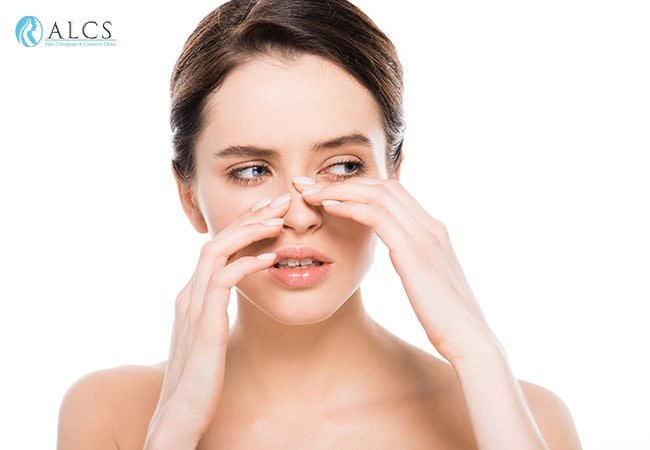
Is rhinoplasty painful? It is one of the main concerns that patients have in mind when they are making the perfect nose shape or functionality decision. Rhinoplasty is a sought-after cosmetic surgery procedure, and patients are often afraid of being hurt.
This guide will enable you to know the amount of pain to expect, how recovery experiences feel, what can help alleviate the pain, and the long-term outcomes that you can anticipate. We shall also respond to related questions like: Is rhinoplasty permanent? And does rhinoplasty leave scars?
Understanding Rhinoplasty: What the Surgery Involves
Rhinoplasty, also known as a nose job, is a surgical operation that reforms the nose. The surgeon can reconstruct the bone, cartilage, or skin to enhance a look or to improve breathing.
Rhinoplasty may be:
- Cosmetic (to alter the appearance of the nose)
- Functional (to enhance breathing)
- Reconstructive (to repair defects during birth or injuries).
The thought of changing the nose sounds agonizing, but the surgery is intended to ensure the patients are comfortable throughout the procedure.
Is Rhinoplasty Painful?
Here is the big question to be answered.
During Surgery: No Pain at All
Rhinoplasty will not hurt you. The procedure is done in the presence of the surgeons:
- General anesthesia (you are asleep)
- or local anesthesia under tranquilization (you are calm, painless)
Due to anesthesia, you will not know what is happening. The operation, per se, is not painful, then.
After Surgery: Mild to Moderate Discomfort
The patients mostly report that the road to recovery is not painful, but rather uncomfortable. You may feel:
- Heavy or sore around the nose.
- Weighed-down sense (such as a bad cold).
- Mild aching under the eyes
- Soreness and swelling of the cheek.
- Occasional headache
Actual sharp pain is rare. During the initial days, surgeons normally prescribe pain medication, which helps to keep the discomfort under control.
The Truth from Most Patients
Individuals who have received rhinoplasty usually state:
- It did not hurt as much as I thought.
- It was not painful but rather like being under pressure.
- The stuffiness was worse than the soreness.
In general, rhinoplasty is not very painful, but the pain levels depend on the person.
Why Discomfort Happens After Rhinoplasty
The changes are naturally accepted by your body after the surgery. Ordinary healing results include swelling, bruising, and congestion.
The following are typical causes of discomfort:
a. Swelling of the Nose Tissues
The nose becomes swollen on the inside and outside following surgery. This brings about a fullness that may be unpleasant.
b. Nasal Blockage
Due to swelling and internal splinting/packing, you may not be able to breathe through your nose for a few days. It may be annoying, but not typically hurtful.
c. Bruising Around Eyes
Others acquire bruises or dark circles below the eyes. This can be a little uncomfortable, but it tends to pass in a week.
d. Pain on palpation of the nose.
The nose will be sensitive in a few weeks, particularly if you bump it.
Pain Timeline: What to Expect Each Day
Patients commonly desire daily ideas of the sensation of pain. Here is a simple breakdown.
| Day/Week | Symptoms |
| Day 1 (Right After Surgery) | You feel groggy from anesthesia. There is pressure around the nose. Pain is mild and controlled by medication. Breathing through your nose may be difficult. |
| Day 2–3 | Mild swelling and congestion peak. Discomfort is noticeable but manageable. Most patients say this is the “least comfortable” stage. |
| Day 4–7 | Pain decreases a lot. Bruising begins to fade. Splint may still be in place. You can do basic tasks without difficulty. |
| Day 7–10 (Splint Removal) | Removing the splint may feel odd but not painful. You feel more normal once breathing improves. |
| Week 2–4 | Mild tenderness remains. Most swelling reduces. You look more like yourself. |
| 1–3 Months | Minor morning stiffness or sensitivity may continue. The nose keeps refining. |
| 6–12 Months | Full healing. Final shape becomes visible. |
Tips to Reduce Pain and Discomfort After Rhinoplasty
Despite the fact that the process of rhinoplasty is not very painful, some pieces of advice will make you even more comfortable.
a. Take Your Medication on Time
Anti-inflammatory and painkiller drugs decrease swelling and pain.
b. Keep Your Head Elevated
Resting on numerous pillows assists in reducing swelling.
c. Use Cold Compresses
Reducing swelling is best done by cooling the cheeks (not the nose).
d. Avoid Strenuous Activities
No heavy exercise, bending, or lifting for at least two weeks.
e. Eat Soft Foods
Hard foods can be both hard to chew and dangerous to your facial muscles.
f. Do Not Blow Your Nose
Blowing may aggravate swelling or internal healing.
g. Stay Hydrated
Consumption of water aids the body in healing more quickly.
h. Protect Your Nose
Do not bump it, put on glasses too soon, or sleep with your face down.
Is Rhinoplasty Permanent? Understanding Long-Term Results
The other most frequently asked questions by patients are: Is rhinoplasty permanent?
Yes, rhinoplasty results are permanent.
The bone and cartilage surgical modifications remain permanent. When the nose is healed, it remains the new shape.
However, remember:
- The nose and face change slightly in response to aging over the decades.
- The skin texture may be influenced by sun exposure.
- Later injuries can change the nose.
Nevertheless, in general, the perioperative optimizations are sustainable.
Why Rhinoplasty Is Considered Permanent
- Cartilage is re-molded, re-positioned, or eliminated.
- The bone is carved or made straight.
- Reorganization is not self-reversing.
The rhinoplasty planned by the surgeons is intended to have a long-lasting effect.
Does Rhinoplasty Leave Scars?
One of the issues of great interest to most patients is: Does rhinoplasty leave scars?
Closed Rhinoplasty
In closed rhinoplasty, all the incisions are within the nostrils.
Outcome: No observable scars anywhere on the body.
Open Rhinoplasty
In open rhinoplasty, a small cut is made at the base of the nose in the columella.
Outcome: A small scar can appear but, it is normally barely noticeable.
Most open-rhinoplasty scars:
- Fade in a few months
- Fades into the skin color.
- Become almost unnoticeable
How to Reduce Scarring
- Do as your surgeon directs on wound care.
- Apply prescribed creams or gels.
- Do not scratch or pick the area.
Generally, all rhinoplasty scars are minimal and hardly a cosmetic issue.
Emotional Side of Recovery: What Patients Should Know
Rehabilitation following rhinoplasty is not a physical process. It has its emotional sides as well.
a. Being Fretful about the Final Result
During the first few weeks, you may be concerned about swelling or appearance. This is normal.
b. Adjusting to Your New Look
A dissimilar nose can require some time to embrace.
c. Feeling Impatient
Treatment will require months; thus, patience will be valuable.
d. Comparing Yourself to Others
Each individual recovery is unique. Your journey is unique.
Being aware of such emotions allows you to remain calm.
When Should You Call Your Doctor?
Though healing of a nose job is generally uneventful, contact your surgeon in case you experience:
- Excessive bleeding
- Persistent fever
- severe, unexpected pain
- Infection or abnormal discharge.
- Not responding to breathing easier.
- Damage to the nose during healing.
Timely and early communication avoids frustrations.
Final Outcome: What to Expect After Full Healing
As soon as the nose is healed up:
- You must breathe better (if functional changes are made).
- The form is made to be natural and defined.
- The swelling is resolved within months.
- You are able to resume normal body activities.
A majority of the patients will be happier, more confident, and comfortable in their appearance.
Pros and Cons of Rhinoplasty
Pros
- Permanent results
- Improved facial balance
- Improved breathing (in functional cases)
- Natural-looking outcomes
- Boost in confidence
Cons
- Recovery takes time
- Transient edema and congestion.
- Minimal pain during the first week.
- Minor possibility of revision surgery.
Having knowledge of both parties assists you in making informed choices.
Conclusion
Have you been asking yourself the question: Is rhinoplasty painful? The answer to it is simple: rhinoplasty is not as painful as most people are afraid of. Anesthesia also means that you do not feel pain, and the post-surgical pain is easily treated with medication and attention. The congestion and swelling can be temporarily painful, but these symptoms fade soon.
The concern above on whether rhinoplasty is a permanent operation, the answer is yes, so you will see the results you will then have for life. And in case you worry about scarring, and you ask yourself the question: Does rhinoplasty leave scars? Fear not, the scars are so small or no scars at all.
Rhinoplasty is a safe and effective surgery that can help you look better, breathe better, and feel better. Through proper preparation, expectations, and having the right surgeon, you can have an easy recovery and a gorgeous new nose.