Get Expert Advice - Free Today

Does PRP Work For Hair Loss And Is It Safe

What is PRP therapy?             

PRP therapy is used to treat joint injuries, muscle injuries, tendinitis, arthritis-related pain and torn tendons. The therapy is also used for various cosmetic procedures such as PRP injections for hair loss problems that are common in both men and women.

Some dermatologists also use PRP technique for the face, which is called the vampire facial. Therefore, the therapy has many uses, and its popularity is also rising due to its numerous uses and advantages.

Is PRP therapy effective for hair loss?

As per studies, PRP therapy’s average success rate for hair loss problems is that people generate around 30% to 40% of hair re-growth post-treatment.

We will look into more studies and examples from the world to check whether PRP is effective in treating the problem of hair loss or not.

As per a report conducted by a group of researchers, 262 patients of androgenic alopecia were taken, and 11 research papers were conducted.

Among these, most of the reports suggested that PRP therapy improved hair loss and enhanced the density and volume of hair and a significant change in hair growth.

Another research was conducted which observed the outcomes of 19 research papers in total. In this study, researchers observed 460 candidates who took the PRP therapy to cure hair loss.

The results were affirmative as most of these candidates claimed that after taking the PRP therapy, they had experienced hair re-growth after being suffered from the problems of androgenic alopecia and alopecia areata.

Therefore, based on many such reports, it was clear that PRP therapy showed positive results to people suffering from hair loss. However, the PRP treatment’s extent of effectiveness was not appropriately analyzed as it may vary from person to person.

Also, PRP injections for hair loss problems may take multiple weeks to start showing results and extend to 6 months to get the desired results.

What is the process of PRP therapy for hair loss problems?

There are specific steps that are fulfilled before receiving PRP therapy for hair loss. The steps are mentioned as follows:

  • The initial step is to stop taking specific medications such as ibuprofen and aspirin that may sometimes cause blood thinning.
  • You may also be required to take a break from any current supplements like omega- 3 fatty acids or any vitamins. Your doctor will guide you with what you must do and avoid before the therapy to get the PRP injections.
  • Although PRP therapy does not include many side effects and harmful symptoms, it involves drawing your blood. So, it’s better to eat something before the therapy to prevent light-headedness.
  • You must also check whether your health insurance covers PRP therapy or not. If your treatment is for cosmetic reasons, chances are any health insurance won’t cover it.

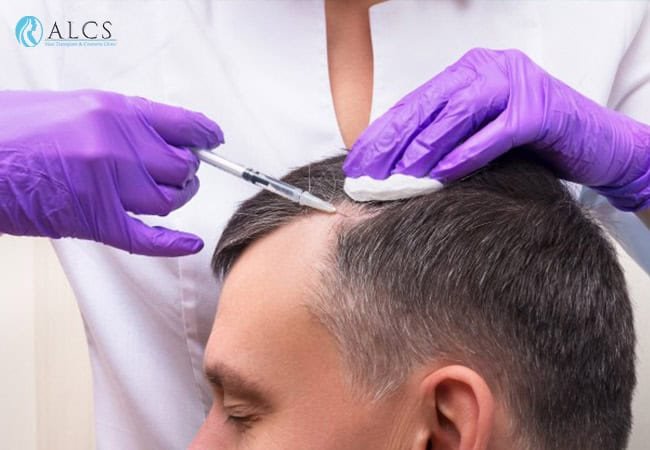
For PRP therapy, your doctor will insert an injection in your vein to drain the blood from your body. Then the blood sample will be kept in a centrifuge which will later spin to part away the PRP from the remains of your blood.

After that, platelets will be extracted by a syringe, and your body will get numb for the treatment to take place. The whole process generally takes one hour where injections are inserted to introduce the plasma into your body.

One may need several sessions to get the desired outcome from the therapy and will ultimately result in higher costs.

How long does PRP therapy last?, and are there any side effects associated with it?

PRP treatment results are provisional and do not last long. Usually, individuals take several sessions to get the desired growth of their hair. After the treatment, you can resume your day-to-day activities after at least 12 hours of the treatment.

The effects also start to appear in a few days and can last up to 1 to 3 years. To have a longer-lasting impact, doctors suggest taking PRP sessions every 3 to 6months to maintain the growth.

As far as its side effects are concerned, PRP therapy is not a complicated procedure and does not involve any symptoms or signs. However, one may experience mild pain, redness, headache, itching and temporary bleeding after receiving the injections.

If you start to have any severe side effects, you must consult your doctor to prevent serious issues.

कम उम्र में बाल झड़ने के कारण

यह देखा गया है कि ज्ज़्यादातर लोग अपने जीवन के किसी न किसी मोड़ पर बाल झड़ने की समस्या से जूझते हैं। ज़्यादातर लोगों को बाल झड़ने की समस्या तब शुरू होती है जब वे काफ़ी कम उम्र में होते हैं या फिर वयस्कता की अवस्था में पहुँच जाते हैं। हालाँकि, कुछ लोगों के बाल तो युवावस्था में ही झड़ने लगते हैं।

बाल झड़ना किसी के लिए भी मुश्किल हो सकता है, खासकर तब जब वे बेहद कम उम्र के हों। बाल झड़ने की वजह से कॉन्फिडेंस पर बहुत ही नकारात्मक प्रभाव पड़ता है। युवा लोगों में बाल झड़ने के संभावित कारण आनुवंशिक या फिर हार्मोनल असंतुलन भी हो सकते हैं। किसी तरह का मेडिकल उपचार भी इसका एक बड़ा कारण हो सकता है।

कई स्थितियों में यह देखा गया है कि, इस स्थिति का जल्दी पता लगने से बाल झड़ने से बचाया भी जा सकता है। आइए समझते हैं कि कम उम्र में बाल झड़ने के क्या कारण होते हैं और फिर इससे कैसे बचा जा सकता है।

कम उम्र में बाल झड़ने के क्या कारण होते हैं?

कम उम्र में बाल झड़ने के कारण आनुवंशिक स्थितियों से लेकर जीवनशैली में बदलाव तक के हो सकते हैं। लेकिन बाल झड़ने के कारण को समझने से सबसे अच्छी बात यह है कि इससे उपलब्ध उपचार का विकल्प चुनने में मदद मिल सकती है।

एंड्रोजेनिक एलोपेसिया

युवा लोगों में बाल झड़ने के सबसे आम कार्बन में एंड्रोजेनिक एलोपेसिया होता है, जिसे अक्सर पुरुष-पैटर्न या फिर महिला-पैटर्न गंजापन के रूप में भी जाना जाता है। यह स्थिति सामान्य तौर पर आनुवंशिक होती है और साथ ही किशोरावस्था में ही विकसित हो सकती है। एंड्रोजेनेटिक एलोपेसिया में बालों का धीरे-धीरे झड़ना शामिल है, जो आमतौर पर पुरुषों में टेंपल और मुकुट के आसपास ही शुरू होता है और महिलाओं में यह स्कैल्प का सामान्य रूप से पतला होना शामिल होता है।

पारिवारिक इतिहास

अगर आपके परिवार में शुरुआती तौर पर बाल झड़ने का इतिहास रहा है, तो आपको भी यह होने की संभावना बेहद अधिक होती है। आनुवंशिकी रूप में बालों के झड़ने की संभावना होती है और यह शुरुआत को भी काफी अधिक प्रभावित करती है। माता-पिता और दादा-दादी में इस तरह के रुझानों का अवलोकन करने से समान समस्याओं के विकसित होने की संभावना का अनुमान लगाने में भी काफी अधिक मदद मिल सकती है।

कुपोषण भी है एक कारण 

कुपोषण की समस्या तभी होती है जब भोजन में पोषण की कमी हो, जो कि पूरा खाना न खाने, बहुत ज़्यादा खाने या फिर पोषक तत्वों का सही संतुलन न होने से हो सकता है।

भोजन की कमी, आहार में असंतुलन, भोजन का खराब होना या फिर उसका अपच होना इसके कुछ प्रमुख कारण हो सकते हैं।

शरीर में निम्न पोषक तत्वों की कमी से कम उम्र में बाल झड़ सकते हैं –

  • विटामिन ए
  • विटामिन ई
  • विटामिन सी
  • आयरन
  • नियासिन
  • विटामिन डी
  • विटामिन ई
  • बायोटिन
  • फोलिक एसिड
  • सेलेनियम

थायरॉइड का असंतुलन होना

थायरॉइड असंतुलन का मतलब होता है जब शरीर में थायरॉइड हार्मोन का कम या फिर ज़्यादा उत्पादन होता है और थायरॉइड का यह असंतुलन कम उम्र में ही बालों के झड़ने का एक बड़ा कारण बन सकता है।

जब थायरॉइड असंतुलन के कारण बाल झड़ने लगते हैं या फिर कमज़ोर होने लगते है तो फिर बालों का झड़ना सबसे ज़्यादा उन लोगों में देखा जाता है जिन्हें थायरॉइड की गंभीर या फिर दीर्घकालिक बीमारी है। अगर झड़ चुके बालों का सही से इलाज किया जाए तो वे जल्द ही वापस भी आ सकते हैं।

 ल्यूपस

ल्यूपस एक ऑटोइम्यून बीमारी होती है जो कि आपके प्रतिरक्षा तंत्र के माध्यम से टिश्यू और अंगों को काफी अधिक नुकसान पहुंचाती है। ल्यूपस के कारण जोड़ों में दर्द, थकान, शरीर पर चकत्ते और कम उम्र में ही बाल झड़ना शुरू हो जाते हैं।

ल्यूपस के कारण बाल झड़ना धीरे-धीरे शुरू होता है और उपचार के बाद ठीक भी हो सकता है।

दवा की वजह से

दवाओं के साथ साथ और कई मेडिकल उपचारों के कारण बाल झड़ना। कई तरह की दवाएँ और बीमारियों के उपचार से भी बाल झड़ सकते हैं। इसके कुछ उदाहरणों में शामिल हैं:

  • मुँहासे की दवाएँ लेना
  • एंटीबायोटिक्स के कारण
  • एंटी क्लॉटिंग दवा
  • एंटीडिप्रेसेंट और मूड स्टेबलाइज़र
  • एंटीफंगल उपचार
  • उच्च रक्तचाप की दवा
  • कीमोथेरेपी
  • कोलेस्ट्रॉल कम करने वाली दवाएँ
  • गठिया की दवा

बालों की देखभाल के खराब तरीके भी है कारण

अत्यधिक स्टाइलिंग, हीट टूल्स का अत्यधिक उपयोग, पोनीटेल और ब्रैड जैसे टाइट हेयरस्टाइल और केमिकल इलाज सभी बालों को नुकसान, टूटने और झड़ने का कारण बन सकते हैं। अपने बालों को स्वस्थ रखने के लिए, आपको कोमल बालों की देखभाल के विभिन्न तरीकों का पालन करना चाहिए।

बालों का इलाज और रंगाई के साथ-साथ स्टाइलिंग भी है कारण

बालों को नियमित रूप से रंगने से काफी अधिक नुकसान हो सकता है क्योंकि इसमें कैमिकल शामिल होते हैं और बालों के टूटने की दर भी बढ़ सकती है।

लेकिन बालों को रंगने से होने वाला नुकसान केवल ऊपरी सतह पर ही होता है और इसलिए आमतौर पर बालों का झड़ना अधिक प्रभावित नहीं होता है। अगर आप अपने बालों को रंगना बंद कर देते हैं, तो फिर आपके बाल फिर से वैसे ही हो सकते हैं। इसका भी इलाज किया जा सकता है।

बालों के झड़ने के अन्य कारण

जबकि आनुवंशिकी और हार्मोनल परिवर्तन अक्सर बालों के झड़ने के प्राथमिक कारण होते हैं, तो वहीं कई अन्य कारक भी इस बीमारी में योगदान कर सकते हैं।

सिर में दाद का होना: दाद एक फंगल इन्फेक्शन होता है जो कि किसी व्यक्ति की खोपड़ी पर खुजली और पपड़ीदार त्वचा के धब्बे भी पैदा कर सकता है। कई मामलों में, यही दाद सूजन का कारण भी बन सकता है जिससे कम उम्र में निशान और बाल झड़ने भी लगते हैं।

टेलोजन एफ्लुवियम: टेलोजन एफ्लुवियम अस्थायी रूप से बालों के झड़ने का कारण बन जाता है। तनाव, बीमारी, गर्भावस्था या फिर वजन कम होना कम उम्र में बालों के झड़ने के कुछ मुख्य कारण हैं।

युवा लोगों में बालों का झड़ना कई तरह के अन्य कारकों पर भी निर्भर हो सकता है, जिससे इसका पता लगाना और इसका इलाज करना मुश्किल हो जाता है। इसमें निहित कारणों को समझना, चाहे वे आनुवंशिक हो, हार्मोनल, पोषण संबंधी, मनोवैज्ञानिक, चिकित्सा या जीवनशैली से संबंधित हों, प्रभावी समस्या समाधान के लिए यह बेहद महत्वपूर्ण है।

त्वचा विशेषज्ञ या ट्राइकोलॉजिस्ट जैसे स्वास्थ्य सेवा विशेषज्ञों से परामर्श करके ही, विशिष्ट सलाह और उपचार विकल्प दिए जा सकते हैं। समय रहते हस्तक्षेप और बालों की अच्छी देखभाल की आदतें युवा लोगों में बालों के झड़ने को प्रबंधित करने और साथ ही इसको ठीक करने में भी काफी मदद कर सकती हैं, जिससे कि बालों के स्वास्थ्य और आत्मविश्वास को बढ़ावा मिलता है।

अक्सर पूछे जाने वाले प्रश्न (FAQ)

1. प्रश्न – क्या तनाव वास्तव में युवा लोगों में बालों के झड़ने का कारण बन सकता है?

हां, तनाव का बालों के स्वास्थ्य पर बेहद अधिक प्रभाव पड़ता है। अधिक तनाव टेलोजन एफ्लुवियम नामक स्थिति पैदा कर सकता है, जिसमें बालों के रोम को नुकसान पहुंचता है और बालों का झड़ना शुरू हो जाता है। अगर यह तनाव लंबे समय तक का है तो यह तनाव बालों के विकास चक्र को भी काफी अधिक प्रभावित कर सकता है, जिसके परिणामस्वरूप समय के साथ बाल झड़ने लगते हैं। इस प्रभाव को स्वस्थ जीवनशैली अपनाकर भी कम किया जा सकता है जिसमें नियमित व्यायाम, उचित नींद और तनाव से राहत देने वाली आदतें शामिल हैं।

2. प्रश्न- क्या पोषण संबंधी कमियों के कारण होने वाले बालों के झड़ने को ठीक करना संभव है?

हां, आहार संबंधी कमियों के कारण होने वाले बालों के झड़ने की समस्या को आमतौर पर उसमें अंतर्निहित कमियों का इलाज करके ठीक किया जा सकता है। विटामिन और खनिजों से भरपूर संतुलित आहार अच्छे बालों के विकास के लिए बेहद महत्वपूर्ण है। विटामिन ए, सी, डी और ई के साथ ही बायोटिन, आयरन, नियासिन और फोलिक एसिड बालों के स्वास्थ्य के लिए आवश्यक हैं। यदि आपको किसी कमी का संदेह है, तो डॉक्टर से बात करें जो कि विटामिन के स्तर को बहाल करने और बालों के विकास को प्रोत्साहित करने में मदद करने के लिए आहार या फिर सप्लीमेंट में बदलाव करने का का सुझाव दे सकता है।

The Ideal Age For Hair Transplant

Hair thinning and hair falling has become a pervasive issue now. There are several cases that people are experiencing acute hair fall due to varied reasons like hormonal imbalance, heredity, stress, or even aging.

No matter what the reason is, hair fall is always traumatic. To get rid of such situations, many people choose to undergo a hair transplant procedure. A hair transplant is the most popular surgical hair restoration procedure where the surgeon utilizes hair follicles from the donor area and then implants these hair follicles to the recipient area.

The two most popular hair transplant procedures are FUE (Follicular Unit Extraction) and FUT (Follicular Unit Transfer). The overall recovery period related to this procedure is generally short, but that mostly varies from patient to patient.

But the practical question, what is the best age for hair transplant?

What is the minimum age for hair transplant?

There lies the most common question. Honestly, there is no best age to get a hair transplant procedure. As long as you are in a healthy condition with no significant health issues, you are considered ideal for undergoing this hair procedure.

It is sad to know that many young people who are in their early 20’s and even some teenagers are experiencing baldness due to some genetic factors and Male Pattern Baldness.

But is that the best age for hair transplant? The answer is No because some risks are associated when a too young patient chooses to undergo this procedure.

First of all, most of the young men want to accomplish the results immediately, which a hair transplant procedure cannot help to achieve. Also, what they do not apprehend that undergoing a hair restoration procedure at a very young age may even leave them looking strange and scarred after a few years. 

Ideally, the minimum age for hair transplant is when you have attained complete maturity, and you have consulted with your surgeon.

This is because anyone undergoing a hair transplant surgery under the age of 25, might still be suffering from male pattern baldness.

So even after undergoing a surgical procedure, these younger people may end up losing the transplanted hair early. 

Again, people in their 20’s are generally more focused on searching for jobs and trying to keep pace with the competitive world. Now, this can give rise to a lot of stress, which may, however, formulate a considerable impact on their final result.

This again proves the fact that there is nothing specific hair transplant age. If you want to undergo a hair restoration procedure, all you have to do is get in touch with any experienced surgeon who can find out if you are eligible for undergoing the process or not.

It is obvious to take care of your hair and appearance when start aging specifically after the forties, and the best news is; several men choose to undergo a hair transplant procedure even in their sixties and seventies.

That is the exact reason that it is essential to consult with professionals and discuss your hair transplant age with experienced professionals who can guide you on the right path.

Who is a perfect candidate for Hair Transplant?

There is no perfect hair transplant age. Anyone who is concerned about their appearance and wants to enhance can choose to experience this procedure but only after consulting with an experienced cosmetic surgeon. 

There is indeed no maximum or minimum age for hair transplant. Still, anyone undergoing a hair restoration procedure must possess some realistic expectations about the final result and the probability of losing hair in the future.

Apart from the hair transplant age of the patient, it is more important to ensure that the patients are in good health condition. To reduce the risk of complications and side effects, the patients must also have a good health condition with no critical diseases and a healthy immune system.

Anyone who has diabetes or taking some prescribed blood-thinning medications must not undergo this procedure as it may profoundly impact the result. 

Finally, irrespective of the absolute hair transplant age limit, it is imperative to maintain a healthy lifestyle like having a balanced diet, drinking plenty of water, exercising, avoiding stress, etc.

It is equally important to completely stop smoking and preventing the consumption of alcohol to ensure no significant side effect during the recovery period.

Does an FUE Hair Transplant Last Forever?

What is the FUE technique?

FUE stands for Follicular Unit Extraction that is a surgical procedure to promote hair growth on your scalp. The medical technique is specially designed to restore hair growth and allow hair follicles to grow healthy and dense.

The main factor in this technique is that the surgery must be performed by an experienced and skilled surgeon who can give excellent results.At ALCS Clinic, we have qualified doctors with us who give exceptional and proven results to our patients, so that their desired look can be achieved.

Does a FUE Hair Transplant last forever?

FUE Hair Transplant is a surgical technique and is regarded as one of the most popular treatments to store your hair’s growth and achieve the desired look.However, the biggest concern of people regarding this technique is whether the results are permanent or not. In this blog, we will talk about the procedure of an FUE hair transplant technique and provide you with an insight into how long this treatment lasts.

Well, the answer is affirmative as an FUE hair transplant technique can last a lifetime. The critical factor to any hair transplant technique is the donor hair follicles that preserve the hair growth and allow the hair to be healthy and dense.Of course, an FUE hair transplant treatment can last a lifetime; however, some conditions are attached. One of the most important factors is that the procedure must be performed by an experienced, skilled, certified, and reputed doctor so that the outcome can be effective.

If that’s not the case, it can affect your overall health growth and also decide how long the transplant will last. Therefore, it’s imperative to find the right doctor for your hair transplant treatment to make it last longer.

How long will it take for an individual to see results?

Another one of the patients’ most common questions is how long the FUE hair treatment will last. After the procedure is performed, an individual can start seeing its results after 8 to 12 months at the maximum.

However, the hair transplant technique results mainly depend on the person’s overall traits; the majority of them start seeing the after-results within a year only.

As they are natural hair follicles, they tend to take time to settle into the scalp and attach to the cells to stimulate the hair re-growth around that area.

Once the hair follicles start to settle into the scalp, you will start to see a difference in your hair’s overall growth. And within ten to twelve months, you will be happy to notice changes in your hair density.

However, within the first few days after your FUE hair transplant surgery, you may experience a little shredding of hair from here and there which is natural and not to be worried about.

The roots of your transplanted hair follicles will be at their places and will start to grow over time.

What is the procedure to perform the FUE Hair Transplant technique?

In this technique, the cosmetic surgeon removes the hair follicles mainly from the back area or sides of your scalp and transfers the follicles into the bald areas of your head.The reason behind taking donor hair from the sides and back of your scalp is that these areas are DHT resistant and have a fair amount of hair growth.

DHT is Dihydrotesterone, a natural hormone produced by the human body and is mostly one of the prominent reasons for hair loss. Both men and women produce DHT; however, androgens are those hormones present in men only and are sometimes referred to as ‘male hormones’. Therefore, in an FUE technique, the surgeon only takes hair follicles from the sides and back to prevent the androgen hormones from acting onto your scalp.

So, the FUE technique only uses your natural hair and does not employ any artificial hair on your scalp. Thus, the results gained are more natural and beautiful than any other hair transplant technique.

Also, hair follicles’ natural transfer begins to re-grow faster, which gives you a life-long solution to your hair loss problem. Therefore, it is true that the results obtained from the FUE hair transplant technique last longer and give natural-looking hair to people.

Reasons For Undergoing A Hair Transplant

Deciding to undergo a hair transplant procedure is crucial. Some desire to experience this procedure as it is, a popular method while some to restore hair.
People tend to choose this surgical procedure because the success rate is quite high than any other treatment procedure and useful for both men and women.

hair transplant is a surgical hair restoration method that involves harvesting the hair follicles from one part of the body or scalp (donor area) and then implanting it to the balding or hair-thinning area (recipient area).

What stimulates the desire to experience hair transplant?

There are different reasons that people might choose to undergo a hair transplant procedure. Following mentioned are some common causes-

  1. Eliminate natural baldness- Since baldness or sudden hair loss can have a significant impact on people’s lives so they may choose to undergo a hair transplant procedure.
  2. Enhance the body hair content- Hair transplant is not only beneficial for those who possess receding hairline. But it also works for people who are not content with their hair volume.
  3. Replace damaged hair- Some accidents and incidents may it be small or big create unavoidable scars. It is only a hair transplant procedure that can help to resolve such injuries.
  4. For cosmetic purposes– In this era, cosmetic surgery plays a vital role in our life where people choose to undergo a hair transplant procedure to increase hair volume in the lashes, eyebrows, or even for the beard.

How thriving is hair transplant surgery?

Now, this is one of the most common questions that may cross your mind before undergoing a hair transplant procedure. However, the next paragraph will resolve all your queries regarding the success rate of baldness.
According to some research reports, about 80 percent of the total transplanted hair grows back within a short period. But the final result will only be visible after 8 to 12 months after undergoing this surgery.

The most common types of hair transplant

There are different hair transplant methods available, and only an experienced hair surgeon can suggest the best treatment for you. Some of the most popular and advanced hair transplant techniques include FUE or Follicular Unit Extraction and FUT or Follicular Unit Transplant. The FUE is such a hair restoration procedure where the follicular units are extracted and transplanted to other parts of the scalp. Such methods may include downtime of 1 to 8 days.

  • FUE success rate – The FUE success rate is pivoted on numerous factors. Take, for instance, if anyone loses hair due to chemotherapy or due to some severe injury to the scalp, then the success rate of FUE becomes slightly lower. Otherwise, the FUE hair transplant is a very successful technique that can yield the most natural outcome.
  • FUT success rate- Here, individual hair follicles are transferred to the recipient area. The hair follicles are segregated from a linear skin strip that is extracted from the donor area. However, FUT has a higher success rate but is a relatively complicated and refined procedure.

How is hair transplant different from grafting?

Even though hair transplant and grafting are closely related, as both involve the removal of hair from the donor site to a recipient, but the fundamental difference between the two is that hair transplant involves removal of hair follicles alone. In contradiction, hair grafting requires the removal of clustered hair follicles

Pre and post-op instructions

As with any medical procedures, it is essential to follow pre- and post-operative instructions as that guarantees the best outcome. Most of the hair surgeons prescribe the following-
Before undergoing a hair restoration procedure, patients are advised to avoid alcohol consumption, smoking, having spicy foods, taking blood-thinning medications, and even engaging in some strenuous activities.
Just while undergoing this surgical procedure, the patients must wear disposable clothing.
Immediately after undergoing the procedure, it is normal for the patients to experience some amount of pain, swelling, and bruising. The patients must also strictly follow instructions that are provided by the surgeon. Additionally, activities like shampooing and brushing must be avoided entirely between ten to fifteen days after surgery.

The Rise Of Technology In Hair Transplant

Different hair transplant techniques keep evolving every day. Out of all the latest strategies used for hair transplants, robotic technology plays a very crucial role in this field. It is mostly utilized to assist the surgeons who are performing the best treatment to achieve the most natural appearing result. However, this statement can also vary depending on the situation. 

Some of the latest hair transplant technology, namely ARTAS and Neo-graft, has already acquired an important position in the field of hair transplant surgery. But the point is, both of these techniques cannot replace manual skills in comparison to the expertise of the most experienced surgeon in performing this procedure. These technologies cannot even deliver the best results without the supervision of a proficient surgeon.

Fundamentals of the Follicular Unit Extraction (FUE) basics

The Follicular Unit Extraction is one of the most popular hair transplant technique, where both the ARTAS and Neo-graft procedures can be utilized to accomplish the best natural-appearing result. When an experienced surgeon performs an FUE, they first start extracting each hair follicles one by one. The best part of the procedure is it involves the formation of no long linear scarring in comparison to any other surgical hair restoration procedures like FUT.   However, if you intend to undergo an FUE procedure, first, you need to be an eligible candidate for experiencing the process.

Once you have been recognized as an experienced surgeon, the surgeon first shaves their patient’s scalp to collect a countless number of hair follicles by utilizing the best hair transplant technique.  These harvested hair follicles are then transplanted to the donor area. The best part is, hair in beard and eyebrows can also be achieved by undergoing this hair transplant technology. However, it is essential to understand that FUE has not replaced the FUT hair transplant technology. It just gives the patient another option for undergoing a hair restoration procedure. The same theory goes with the ARTAS or the Neo-graft techniques. But it is important to remember that all of these techniques can only assist a hair surgeon in performing the best FUE hair transplant procedure.

What is ARTAS?

ARTAS is one of the latest hair transplant technology that utilizes a robotic system to complete a hair transplant surgical procedure.
This is currently gaining quite a great popularity among the most updated clinics and surgeons due to its efficiency in extracting hair follicles.
This system has got a fantastic programming system where the ARTAS assesses the hair follicles and then picks the follicles that are recognized as the best choice for transplantation.
Finally, the hair follicles are harvested by the device from the donor area within the least possible time.

What is Neo-graft?

Well, there is a massive difference between Neo-graft and the ARTAS in which a neo-graft is not a computerized or robotic device.
It is one of the latest hair transplant techniques that involve using a simple handheld device that can help to add some automation to the hair extraction procedure.
Some amount of pressure must be applied to this gadget, to facilitate the hair follicle extraction procedure from the donor areas. The Neo-graft technique is intended to accelerate the FUE procedure.
However, some other FUE Techniques can effectively remove the grafts as efficiently as it does. This particular device is used when a person is undergoing a hair restoration procedure for the first time.

The verdict

However, anyone experiencing a hair transplant procedure must remember that there is no single hair transplant technique that suits everyone.
There is no doubt that gadgets like ARTAS and Neo-graft have a lot of facilities, and some experienced hair transplant surgeons can only handle these devices. But the efficiency of these devices is far away from matching the skills of an experienced cosmetic surgeon.
In case you want to get the best advice on the latest hair transplant techniques, it is imperative to consult with an experienced surgeon who can explain the best option for you after analyzing your medical conditions.

You can get in touch with such a hair transplant surgeon at our ALCS clinic. We select surgeons and other staff for our clinic based on their experience and qualification. In addition to this, we also utilize all the latest up-to-date equipment that helps in providing the best services to every single patient who intends to restore their lost hair by undergoing the latest hair transplant technology. 

Why is FUE Hair Transplant Considered the Best?

FUE stands for Follicular Unit Extraction, and it is one of the most popular techniques for hair transplant treatment. FUE is considered the best surgical technique to restore your hair growth and help you achieve a natural look. In this article, we will talk about why FUE is regarded as the best technique for hair transplant methods and what are its various benefits.

What are the benefits for FUE Hair Transplant technique?

FUE method is a surgical technique used to restore your hair’s growth by transplanting hair follicles from the donor sites of your head to the recipient’s side. The technique has numerous benefits and is the most popular method for hair loss treatment. FUE gives a permanent solution to your hair loss problem. The surgical procedure involves extracting natural hair follicles from the sides and back area of your head to be further transplanted into the balding areas.

FUE technique ensures that the hair follicles will grow naturally over time, and there will be no risk of additional hair loss from this treatment. In an FUE technique, the reasons for taking donor hair follicles from the sides and back of your head is that these areas are DTH resistant. DHT is a natural hormone that is produced by the human body and is responsible for hair loss.

That is why hair follicles are taken from the DTH resistant areas to eliminate the DTH hormone as much as possible from the body. After the treatment is being performed, it usually takes eight to twelve months for the results to appear. Once your natural hair starts re-growing, results are more prominent, and within a year, the individual will start to see the difference in their hair growth.

Is there any scarring in the FUE treatment?

FUE is considered the best technique for hair loss problems as it involves minimal scarring. Yes, tiny holes are made to extract the donor hair follicles from your scalp during the surgery, which leave you with very minimal scarring. Need not worry as these scars heal very quickly and once the hair is re-grown, it is hardly visible to anyone. However, the most crucial factor in an FUE surgery is that the surgeon must be highly skilled and experienced in performing the task because the surgeon’s expertise and cognizance decide the overall results and efficiency of your surgical treatment.

At ALCS clinic in Jaipur, we understand your concern and, that is why we have the best and experienced surgeons to perform the surgical operation who are board-certified and qualified professionals and gained years of practical experience over years. After the surgery, very active people are more likely to recover soon. As the surgery involves significantly fewer incisions and minimal scarring, the patient is not asked to take bed rest; instead, they can continue with their day-to-day activities following the procedure. However, in case if you feel pain and uneasiness, consult your surgeon on a top priority basis who will surely recommend you to take extra care for the first few days of your treatment and take enough rest.

How long is the recovery time?

The recovery time after the surgery is usually short and counts as another significant benefit of the FUE hair transplant technique. Many people prefer FUE technique because the recovery time is short and people can resume their day-to-day activities soon. In such hectic lives, it has become challenging to take time off work; therefore, people prefer such techniques and treatments that need lesser time to recover and lesser aftercare.

Nonetheless, the recovery time mainly depends on the person and how effectively the surgeon has operated. If there were any complications involved in your surgery, the aftercare would be much more intense, and the recovery time will also be longer. If you experience pain and discomfort after your surgical operation, you must immediately consult your surgeon as he/she will guide you on the aftercare.

FUE technique is more effective than FUT technique and has numerous benefits associated with it. However, it depends on how severe your hair loss is and the underlying cause of your hair fall problem. All in all, the FUE technique is an excellent technique to prevent hair loss and help you acquire natural-looking hair. Also, with so many advantages, people prefer FUE than other hair transplant techniques for their treatment.

What Is The Success Rate Of Hair Transplant?

When it comes to the success rate of hair transplant, it’s imperative to understand what ‘success’ means in this regard.
The opinions of the clients matter about the results because every client has a different condition and requirement. So, the physician must prepare a customised plan and strategy for individual clients based on their needs and hair condition. 
Almost all hair transplant surgeons take 90% as the lowest acceptable threshold. However, the ideal hair transplant success rate ranges from 95%-98%. The doctor’s expertise in using the technology plays a crucial role in determining the success rate. 
Patients who want dense and natural hair choose a surgical hair transplant because it’s a permanent solution. Take a look at different factors that affect the success rate of hair transplant

Overview

Since patients invest financially and emotionally in hair transplant, it’s common that they would like to know about the success rate. Here are some points to consider when thinking about the effectiveness of hair transplant and how successful it was. 

  • Before you judge the success rate for a hair transplant, you must wait until the complete growth of the transplant. 
  • It’s also important to consider the skill and experience of the surgeon who will perform the transplant. Additionally, you should also consider the technology used for transplanting hair. 
  • Reputable hair transplant surgeons always aim to meet real expectations; they don’t promise falsely.
  • For a 100% success rate, the hair transplant surgery must prepare a personalised technique and recovery strategy for different patients. 
  • Apart from hair transplant, it’s also essential to take care of hair fall and other problems. 

These are some crucial factors that determine the success rate of hair transplant. Apart from these, the procedure of hair transplant is also vital. So, let’s take a look at how it can affect hair restoration. 

Selection of Hair Transplant Procedure

The hair transplant procedure is also a crucial factor that indicates the success rate. Patients must understand the different procedure by consulting with the expert and discuss which method can bring them the best results. 
For example, the FUT method has a success rate of 95-98% if done effectively. Sometimes the success rate also reaches 100% due to the transfer of follicular graft.
On the other hand, the fue method results in a comparatively lower success rate of hair transplant. Remember, it requires multiple sessions for effective results on hair transplant.

Graft Survival

Studies show that the success rate of hair restoration surgery depends on the growth of implanted hairs in the transplanted area, which is around 85-95%. However, some patients fear graft rejection.
Remember, it is less likely to be rejected if you choose the FUE method for hair transplant. Furthermore, it largely depends on the surgeon you choose for a hair transplant. So, let’s see how to choose the right hair transplant surgeon.

Choose the Right Hair Transplant Surgeon

The success rate of a hair transplant mainly depends on the surgeon you choose for your transplantation. Even though most surgeons claim a 98% success rate, their skills, experience, and technology they use can help you decide the right surgeon.

Here are some critical factors to note before choosing a hair transplant surgeon. 

  • A good surgeon will first check and decide whether you should transplant hair. The right surgeon never makes you set idealistic expectations during your diagnosis. 
  • If the surgeon determines that the treatment standards are appropriate after checking the donor’s hair level, he or she can ensure at least a 95% success rate.
  • Before you choose a surgeon, you must meet the surgeon by making an appointment for an initial consultation. 
  • Remember, if you have more hair loss, the chances are less you will be selected for a hair transplant. So, it’s better to consult a surgeon when you are in the initial stages of hair loss. 

The female hair transplant success rate is also not much different than male. So, you should find the right surgeon by considering these above factors. 

Conclusion

The success rate of hair transplant is not just about choosing the best surgeons and procedures. It’s also essential that you remain confident and trust the process and the doctor you choose for a hair transplant.
To end, you must have realistic expectations from the results of the procedure

7 Things You May Not Know About Rhinoplasty

 We have always characterised the nose based on the appearance rather than its functionality.
Born with it so got to carry on with it our whole lives! But in today’s age with the growth of technology and medical procedures if we have the option of alteration to bolster our confidence or simply have a beautiful nose, then why not?

Rhinoplasty is one such surgical procedure to change the nose’s appearance for beauty reasons or improve the breathing issues. Here, we briefly discuss the whys the whats and the hows of Rhinoplasty.

Rhinoplasty is more than aesthetics:
Surprise: approximately 88% of people have a deviated septum. Not all 88% want the most beautiful nose, but the need arises for rhinoplasty to improve breathing functionality.
Apart from appearance rhinoplasty is opted for an injury, a congenital disability, or specific breathing problems. Deviated Septum occurs when one of the nasal passages is smaller than the other and causes nasal congestion and shortness of breath.

It’s advisable to opt for Rhinoplasty at an age when the nose bone is fully grown in cases related to appearance. Although in cases of breathing problems, it can be performed in young children as well.

No two noses are the same:
Your nose is your own as it balances and blends with the features of your face. A sort of harmony exists which is unique to every face. The encircling features also influence the way your nose looks.
The noses are structurally identical but appear differently on people due to their other features. Dr Sunil Arora always asks his patients to bring pictures of noses they would like during consultation.
It helps me understand what to replicate and what are the problem areas. Using images, he then creates the appearance that works in the best interest of the patient.

There is more to rhinoplasty:
There are two types of procedures in Rhinoplasty. Dr Sunil Arora examines the ratio of bone to cartilage and the areas of concern to determine which method would work best for you.
The shape of your nose and desired results would play a key role in finalising the procedure. Following are two procedures: –
Closed Rhinoplasty: – In this procedure, incisions and modifications are performed inside the nose. It is mainly conducted on patients who need minor changes in the size and shape of the nose.
There are no visible scars in this procedure, takes lesser time to perform, and has a shorter recovery time. Limited access to the nose and visibility into nasal structures can make it challenging for the surgeon to perform accurate modifications.
Open Rhinoplasty: – This procedure is done on patients with a significant change in size and shape of the nose, patients with a previous rhinoplasty and or corrections in the nasal or middle part of the nose.
An in-depth view of the nasal structure helps the surgeon identify the abnormalities, ensuring the usage of advanced cartilage grafting techniques. A more extended healing period with a visible scar is the major drawback of this procedure.


Dr Sunil Arora, from ALCS clinic, always asserts that it will take time for swelling to heal, skin to contract and the final appearance to come through. A few patients might notice immediate results, but for some, it takes time.
Also, patients needn’t hide away for a month, as the subtle improvements are noticeable. They can move around in public and socialise as the changes are very modest and they needn’t worry about being the talk of the town.

Experience counts:
Be it rhinoplasty or any surgery; the doctor’s experience is vital. Verify the credentials of the doctor before going under the knife. Also, ask for additional proofs like before and after images, patient testimonials and licensing.
Dr Sunil Arora is an established plastic surgeon with years of positive track record,which asserts how well his surgeries have been.

Best of both the worlds:
Did you know you can undergo other cosmetic procedures along with rhinoplasty? Cosmetic surgeries like refining the cheeks or chin or even lips can be carried out with rhinoplasty as they heal around the same time or sooner. Book a consultation with Dr Sunil Arora to understand and know more about it.
ALCS patients should know that their appearance is in Dr Sunill Arora’s skilful hands and support, guidance, and motivation will be given every step of the way. If you are not happy with how your nose wriggles or looks, Dr Sunil Arora is just a consultation away.

Are There Any Side-Effects After Hair Transplantation

Hair loss can be a terrible thing to deal with in real life. It depreciates both your physical and mental well-being. Although it may occur due to factors like genetic and hereditary in most cases, there can be multiple other factors, too, for which men and women suffer from hair loss. Studies say that approximately 60% of men and 50% of women suffer from hair loss worldwide due to factors like stress, pollution, traction alopecia, and even hormonal imbalance this. 

The pattern baldness generally occurs due to genetic reasons and is mostly hereditary. There might not always be systemic or generic internal disease for hair loss; in most cases, it is due to predetermined health issues and genetic factors. However, still, there are several reasons for which a person may suffer from hair loss. Life difficulties like illness, emotional trauma, pregnancy, menopause, puberty, protein-deficient diets, thyroid diseases, iron deficiency anemia, and secondary syphilis can also cause hair loss.

Hair fall treatment options

But technological breakthroughs have made it possible to resolve such conditions by treating conditions with medicines and several treatment procedures like PRP treatmentHair Transplant, Hair grafting, etc. Now several kinds of medications are available that can help reduce hair fall and boost the hair re-growth.  However, with the dawn of modernization and technological advancement, hair transplant surgeries are the most effective treatment in response to hair fall or pattern baldness. 

What is a hair transplant procedure?

It is a permanent procedure that involves extracting hair follicles individually or in multiple numbers (by removing a strip of scalp skin) from a place on the body. The donor area usually has a dense and healthy growth of hair (at the side or the back of the head) and grafting them surgically on the balding area. The place where hair follicles are being extracted is called the donor site, and the place where they are grafted is called the recipient site.

Types of Hair Transplant

There are mainly two methods that have been considered by doctors across the world to be the most effective way of hair transplant surgery- Follicular Unit Extraction (FUE) and the Follicular Unit Transplantation (FUT).

  • In FUE, hair transplant methods, the surgeon extracts individual hair follicles from the donor site using designated tools and then grafts those follicles one by one in the recipient site as required to match the density and growth angle of the surrounding hair.
  • The FUT is a comparatively more straightforward process. In this procedure, a strip of scalp skin containing hair follicles is cut off from dense hair growth. Those follicles are then separated, employing a sharp knife and divided to serve the essential need and then grafted into the recipient site.

Side- effects of hair transplant

As much fool-proof and effective as hair loss treatment, there are a few side effects of hair transplant surgery. The doctor must educate the patients on these side effects before proceeding with the surgery.

  1. Itching
    This is probably the most mainstream side-effect of hair transplant surgery. The scabs formed while performing the surgery cause the areas to itch. Although it is best advised not to touch those areas, let alone scratch. It will eventually fade within a few days. The doctor might prescribe the patient some medications to help him or her to feel a bit of relief from this problem.
  2. Swelling
    Swelling is a common side effect related to the hair transplant procedure. Most patients experience swelling near the neck, back of the head, and around the eyes immediately after following the surgery. But these are temporary side effects and can be resolved if patients strictly adhere to the surgeon’s instructions. 
  3. Bleeding
    Minor bleeding takes place from the donor site while performing the surgery and ends within a few hours.
  4. Hair Shedding
    Hair shedding during the recovery period is very reasonable. There is no need to get worried when you see the transplanted hair falling off from their place. They are meant to fall, as they make up space for new hair to grow from that same place.
  5. Formation of cysts
    Cysts are small pimple-like structures that are formed on the surface where hair follicles are transplanted. This, too, is normal and disappears after taking proper medications.
    The above discussed are mostly short-term complications as they disappear within a few days or weeks. Also, they vary from person to person and can be well taken care of with proper medications.