The first thing to know about hair transplant, as far as the results you would be getting after the surgery are concerned, would be understanding the hair loss stages you are going through, particularly in cases of more severe baldness. Thinning is the first stage that many men notice in the early stages of hair loss, but this stage can develop into total loss on the top and crown. The Norwood Scale of 7 stages of hair loss process explains how hair loss stages proceed through recession factors to an extreme loss in male hairiness.
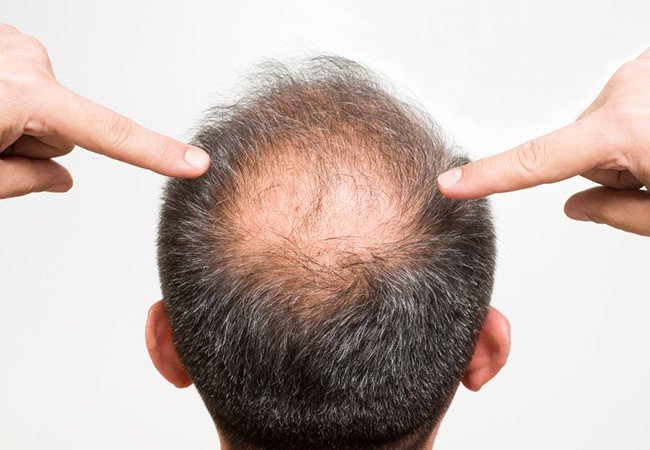
When you are Norwood 5-6 or 7, you are in the advanced category. This implies that the hairline is extremely receded, the top is also severely impacted, with only a band of hair in the shape of a horseshoe left on the sides and the back. The next question is obvious: Is it possible to restore full density using a hair transplant? It is a fact that with modern methods, it is possible to do wonders, but one cannot expect too much.
This article is a clear description of what to expect when having a hair transplant at Norwood 5-7, what the constraints are, what the outcomes are, and how to plan to achieve optimal results.
Understanding Hair Loss Stages (Norwood Scale)
Norwood Scale is a scale used worldwide to categorize the 7 stages of hair loss in men. It assists physicians and patients in knowing the trend and intensity of baldness.
Early Stages of Hair Loss (Norwood 1–3)
These stages include:
- A slightly mature hairline
- Mild temple recession
- In more advanced cases, thinning of the crown.
In these initial phases of hair loss, the donor (posterior part of the head) is sound. A hair transplant typically produces almost perfect results since the loss of hair is not extensive.
Advanced Male Hair Loss Stages (Norwood 4–7)
It is at this point that hair loss takes a serious turn:
- The hairline recedes deeply
- The mid-scalp thins
- The crown becomes bald
- The anterior-crown junction is lost
Norwood 5–7 involves:
- Severe thinning
- Very limited native hair
- Dependence on donor hair
In these advanced male hair loss stages, the outcomes of transplantation are highly reliant on the quality of the donor areas and the follicle survival.
What Makes Norwood 5–7 Baldness Unique?
Hair loss becomes much more complicated to cure when you get to Norwood 5–7. Early losses require fewer grafts, whereas advanced losses require thousands.
Key characteristics:
- The bald patch encompasses the whole front, mid-scalp, and crown.
- The rest of the hair on the sides and back is the sole donor.
- The head can be glossy, smooth, and completely bald.
- Hair loss is usually stable but can persist gradually.
The bald area is big, and the supply of donors is limited, so total coverage is not always possible. Instead, the goal is:
- To rebuild the hairline
- To form a front and mid-scalp densely.
- To cover the crown partially.
To the thickness of your youth is impossible, but to the appearance, a great deal.
How Many Grafts Do You Need for Norwood 5–7?
Mild cases need fewer grafts as compared to advanced hair loss stages. Below is a general estimate:
- Norwood 5: 3500–4500 grafts
- Norwood 6: 4500–6000 grafts
- Norwood 7: 6000–7500+ grafts
(This may require multiple sessions.)
But what you will actually have is determined by:
- Donor density
- Hair thickness
- Scalp flexibility
- Hair traits like curls and color.
Physicians usually give priority to:
- The highest density is in the front and mid-scalp.
- Fewer donors/crowns may not be dense at all.
Can Norwood 7 Achieve Full Coverage?
This is among the most popular questions on the stages of male hair loss.
The truthful response: No, not complete youth coverage.
Why?
- With even the best donor hair, the total quantity of grafts is limited.
- The bald area is very large.
- The hair transplanted has to be placed strategically to appear natural.
This does not imply that you cannot appear younger and fuller.
Realistic results include:
- A natural, mature hairline
- Good density in the front
- Shallower but sufficient coverage by the crown.
- Improved facial framing
- A tougher, macho look.
This transformation will make you appear 10-15 years younger.
What Does a Realistic Hairline Look Like for Norwood 5–7?
Men who have extreme hair loss tend to have low and young hairlines. But what hair transplant doctors typically create is a full-grown hairline that is:
- Higher
- Natural
- Fit your age and donor strength.
A lower hairline:
- Consumes too many grafts
- Leaves less for the mid-scalp
- May look unnatural later
A higher hairline ensures:
- Long-term sustainability
- Good density in key areas
- Proper balance
The objective is to achieve the appearance of fullness through intelligent thinking.
The Importance of Donor Area Quality
The beginning of success lies in your donor area. When male hair loss stages enter the advanced phases, the donor is supposed to be used in a manner that does not overexploit it.
Strong donor areas include:
- Thick hair
- Double hair grafts
- Minimal thinning
- Good scalp elasticity
In case of weak donor hair, physicians can combine:
- Beard hair
- Chest hair
These are body hair grafts and are primarily used on the:
- Crown
- Mid-scalp
- Adding volume
This hybrid strategy provides superior coverage.
FUE vs. FUT for Norwood 5–7: Which Technique Is Better?
In cases of progressive hair loss stages, both procedures are beneficial.
| Method | Results |
| FUT (Strip Method) | Provides more grafts in one session Useful for Norwood 6–7 Leaves a linear scar (hidden by surrounding hair) |
| FUE (Follicular Unit Extraction) | No visible strip scar Faster healing Allows extraction from beard and body |
| Combined FUT + FUE | This is the most powerful approach for severe baldness:Maximum grafts Better density Natural results |
Combined methods are recommended by the majority of surgeons in Norwood 6-7.
What Results Look Like: Month-by-Month Breakdown
It is true that transplanted hair follows a timeline, regardless of whether your level of hair loss is in the early or advanced stage.
| Months | Results |
| 1-3 Months | Shedding of transplanted hair Redness and scabs disappear No visible growth yet |
| 4-6 Months | First thin strands appear Mild density Hairline begins to show shape |
| 7-9 Months | Faster growth Texture improves Mid-scalp fills in |
| 10-12 Months | Good density Visible transformation Hairline looks natural |
| 12-18 Months | Hair becomes thicker Density becomes uniform Final results visible |
In the case of Norwood 6–7, the timeline can be slightly extended, particularly the crown.
What Is Realistic for the Crown Area?
The crown proves to be the hardest area to be restored in later hair loss stages. It gives low visual impact and requires lots of grafts.
Physicians tend to adhere to the rule:
Hairline and front > Mid-scalp > Crown.
This guarantees a natural look.
For Norwood 5–7:
- A less dense (20–40 grafts/cm²) crown is typically transplanted.
- There are patients who opt out of coverage of the crowns because of insufficient donor supply.
- Other people apply SMP (Scalp Micropigmentation) to contour the top of the head.
Expect:
- Light to moderate coverage
- A whirl pattern
- A natural, non-high-density look
Can You Achieve a Full Head of Dense Hair?
It is not an unusual request, particularly when considering the results of social media.
But the truth is:
- Advanced male hair loss stages have a short supply of donors.
- It is impossible to have a full head of thick hair (such as Norwood 1-2).
What is possible:
- A natural, youthful front hairline
- Density at the right places.
- A balanced, mature look
- Marked enhancement in appearance.
Perfection is not the aim but aesthetic improvement.
Tips to Improve Results at Norwood 5–7
1. Start Treatment Early
Although you are at an advanced stage, further loss will be controlled.
2. Use Medical Therapy
Medication assists in stabilizing and enhancing graft survival:
- Finasteride
- Minoxidil
- Biotin
- Low-Level Laser Therapy
These preserve donor hair and strengthen existing hair.
3. Consider Two Sessions
Large areas often require two transplants separated by 12-18 months.
4. Maintain Good Scalp Health
Avoid:
- Smoking
- Excessive alcohol
- Stress
These influence blood circulation to the head.
5. Choose an Experienced Surgeon
For advanced hair loss stages, competence is even more important.
Following is the ALCS pricing for each scale of baldness
| Level of Baldness | Avg cost of QHT transplant | No of Graftt required |
| Norwood Scale 2 | 50,000 – 70,000 | 800-1200 |
| Norwood Scale 3 | 70,000 – 90,000 | 1200-1800 |
| Norwood Scale 4 | 90,000 -110,000 | 1800-2500 |
| Norwood Scale 5 | 110,000 -130,000 | 2500-3200 |
| Norwood Scale 6 | 130,000 -150,000 | 3200-4000 |
| Norwood Scale 7 | 150,000 -200,000 | 4000-5000+ |
Before-and-After Expectations
A practical change in Norwood 5-7 involves:
- Observable hairline advancement.
- Frontal thickening.
- A smoother skin on the face.
- Moderate crown coverage
- Direction and angle of hair.
With a frontal view, the change is dramatic. You will see less density from the top, yet still, a tremendous improvement.
Who Makes an Ideal Candidate?
You are a good candidate if:
- You have a strong donor density.
- Your hair loss is stable
- You accept a mature hairline
- You know realistic expectations.
- You are ready to be treated with medical therapy.
When you have a weak donor area, you may require:
- Combined FUT + FUE
- Beard and chest hair grafts
- Multiple sessions
Conclusion
When you are at Norwood 5–7, you are in one of the most severe male hair loss stages. But in the modern technique, you will be able to get a natural and confident appearance.
What you can expect realistically:
- A natural, higher hairline
- Good density in the front
- Partial crown coverage
- Another significant enhancement in your appearance.
What you cannot expect:
- Teenage-level density
- A low hairline
- Thick crown coverage
It takes the right attitude, a true management of expectations, and a surgeon with experience to provide you with a life-altering experience- one that looks like a natural, mature, age-appropriate appearance.