Get Expert Advice - Free Today

10 Reasons to Opt for FUE Hair Transplant

People who are suffering from balding or hair thinning issues tend to find the safest and the most effective procedure that can help the hair to grow naturally. That is when a hair transplant procedure comes into action. FUE (Follicular Unit Extract) and FUT (Follicular Unit Transplant) are the two most common types of hair restoration procedure that is widely performed.

  • Follicular Unit Transplant (FUT) involves removing a strip of skin from the hair-bearing area, and then it is closed with a suture. The extracted piece of skin is divided into smaller segments and then finally transplanted to the hair thinning or balding area. However, in FUT, the donor area needs an incision which is concealed with the surrounding hair.
  • Follicular Unit Extraction (FUE) is the least invasive method that involves extracting single hair follicles from the back and sides of the scalp and then transplanting these hair grafts to the hair thinning or balding area. For this procedure, the donor site heals faster, only leaving behind some tiny spots that gradually disappears with time.

However, when it comes to undergoing the best hair restoration procedure, most of the people choose to undergo an FUE procedure. This article will explain about the top 10 reasons that people should choose FUE to regrow hair on balding areas naturally.

Ten reasons that people love FUE

  1. Minimal scaring- The best part about undergoing an FUE hair transplant is that it does not leave behind any visible scarring in comparison to the FUT hair transplant procedure. This is because FUE involves extracting individual hair follicles giving rise to tiny dots that gradually disappears with time.
  2. No Stitches- The FUE hair transplantation procedure includes extracting individual hair follicles from the sides and back of the scalp, which is the donor area. So this least invasive procedure does not involve making any stitches at the donor site.
  3. Short downtime– The FUE procedure involves no stitches, but the donor area needs to be shaved so that extracting individual hair follicles is easy. So the downtime for FUE is extremely short, and people can return to their work within 3 to 5 days of undergoing the procedure.
  4. Minimally invasive– There is no doubt that FUE is one of the least invasive procedure, especially in comparison to FUT. As FUE involves harvesting individual hair follicles from the back or sides of the scalp, whereas FUT involves excising out a strip of skin from the back of the scalp and then the donor area is sutured back.
  5. Multiple Transplants– People with a huge bald patch will not be able to accomplish a head full of hair in just one session. In that case, the surgeons may choose to perform several sessions to achieve the final result. So candidates who need to undergo multiple hair transplants should opt for an FUE procedure.
  6. Suitable for all hairstyles– Candidates with short and long hair can choose to undergo an FUE Hair Transplant procedure. But FUT can only be experienced by people with long hair so that the linear scar is concealed.
  7. Little to no discomfort- People who choose to undergo an FUE procedure mostly experience no pain at all as it is the least invasive procedure.
  8. Natural appearing result- The FUE hair restoration procedure achieves the most natural appearing result as there is no role of plugs. However, to make the most natural appearing result, it is always the best idea to choose a proficient and skilled cosmetic surgeon who can perform the procedure flawlessly.
  9. Minimal Donor site Numbness– During the FUE recovery period, most of the patients feel minimal to no numbness or discomfort at the donor site.
  10. Fewer restrictions after the procedure– Patients who undergo an FUE procedure does not have to follow numerous guidelines during their recovery period.

Now that you already know the reasons that you must choose an FUE hair transplant, it is imperative to find the best clinic that can help to accomplish the most desired result. If you are trying to get in touch with the most reliable clinic in Jaipur, then, ALCS can be the best option. The clinic consists of the most proficient and experienced surgeon Dr. Sunil Arora who is dedicated to rendering the best services to his patients at the most affordable price range.

Hair Transplantation’s History

Earlier hair thinning and baldness had no specific cure unless in the twentieth-century several dermatologists and researchers started taking endeavours that can help to restore natural hair growth to the bald spots. Since then, the techniques kept evolving, giving rise to the history of hair transplant surgery. Several years of research and scientific breakthrough finally delivered the most established hair loss solution for today. This blog will explain how hair transplant improved over the past decades to become what it is now.

The Initial Years- 1930s

Hair transplant surgery first originated in Japan during the 1930s, where dermatologists found out a way to restore hair specifically for the burn victims and people who have endured scalp injuries. Dr. Shoji Okuda was the one who had the basic idea of extracting a hair-bearing strip of skin from hair-bearing areas and implant them to the hairless areas. Later on, he used this treatment on patients who were suffering from traumatic Alopecia and Androgenic alopecia as well. However, he did not get any recognition due to the commencement of World War II, and his research remained unavailable to the western practitioners.

The Early Years- 1950s

During this time a dermatologist in New York named Dr. Norman Orentreich began to explore the concept of relocating or transplanting the hair from the back and sides of the scalp to the balding areas. He was able to prove the basic principle of hair transplantation which asserts that transplanted hair continues to exhibit the same features of the hair from where it has been extracted. He was the one who termed the word “donor dominance” that explains the reason why hair in the donor area is resistant to balding and continues to grow after it is transplanted to the hair thinning or balding areas of the scalp.

The consecutive years- 1960s and 1970s 

During this time, the hair transplant procedures included using larger hair grafts that are commonly known as hair plugs. The larger hair grafts were removed in such a way that it consisted of numerous hair follicles leaving behind round punches. But unfortunately, these hair plugs produced the most unnatural appearance causing innumerable people to develop a negative impression about the concept of hair restoration surgery.

Mini-grafts and Micro-grafts- 1980s 

During the time 1980 to 1990, the terms “mini-grafting” and “micro-grafting” came into effect. The micro-grafts were used to implement a smaller number of grafts that allowed the surgeon to soften the frontal hairline, delivering maximum natural appearance. This micro and mini graft technique eventually evolved into today’s modern hair transplantation as FUE (Follicular Unit Extraction) and FUT (Follicular Unit Transplant).

Follicular Unit Transplantation- the 1990s

One of the most popular Follicular Unit Transplantation (FUT)procedures that are still in practice. The process was initially introduced in the year 1995 as one of the most cutting-edge techniques of that time and became famous as the strip method. The FUT procedure involves removing a thin strip of hair from the back and sides of the scalp and then transplanting smaller sections of it to the balding area. 

Follicular Unit Extraction- 2000s

Follicular Unit Extract was introduced in the year 2002 with the advancements in technology and is still performed as it is one of the best procedures. This Gold-standard hair restoration procedure involves removing individual hair grafts from the scalp and then transplanting each of these hair follicles to the balding area.

Robotic Follicular Unit Extraction

Robotic Follicular Unit Extraction is one of the latest and the most advanced hair transplantation technique that works precisely. The Robotic hair transplantation is a technology-dependent method that is no doubt one of the most cutting edge techniques that were introduced in the year 2011 with the name of ARTAS Robot.

Final verdict about the History of Hair Transplantation

It can be quickly inferred that one of the most advanced hair restoration procedure has developed over the past few decades. People who strive to get rid of their balding and hair thinning issues can choose to undergo a hair restoration procedure to accomplish the most natural appearing result.

So if you want to undergo the most advanced Hair Transplant procedure from one of the best hair clinics in Jaipur, then ALCS can be the best option. One of the most proficient hair surgeons of the clinic Dr. Sunil Arora, utilizes the latest technology and combines his skill and artistry to create the most natural hairline.

10 Things to Know Before a Beard Transplant

Hair Transplant isa restorative procedure which is utilized to implant hair to the balding areas of the scalp. But nowadays, hair transplant is not just performed on the head, but it also showed on the face to restore moustache and even beard. For maximum men, beard and moustache are a sign of masculinity, and it takes quite a considerable amount of time to grow a beard for some people. So mentioned below are ten crucial points that you should know before undergoing a Beard Transplant procedure.

  1. The procedure can be a costly one– Generally, the cost of a hair transplant procedure varies on several factors like the extent of the recipient area, the number of hair follicles required to cover the balding area, the surgeon’s fee, anaesthetic used, etc. Similarly, the cost of a beard transplant will also depend on similar factors. The greater the area needs to be covered; the higher will be the cost of the procedure.
  2. Produces a result of your choice- Before choosing a beard transplant procedure, it is essential to consult with your surgeon to get the guidance about the entire process after knowing your requirements. This will also help you to set a realistic expectation about the procedure.
  3. The donor area will be just a body part- A person who is willing to undergo a beard hair transplant procedure will require a donor area from where the hair follicles will be extracted. So most of the surgeons prefer using hair follicles from another part of the body. However, if the patients lack donor’s hair, then donor hair follicles can also be extracted from someone else’s body.
  4. The transplanted hair will fall off– After experiencing a hair transplantation procedure, the patients will find that the transplanted hair to start shedding off after two weeks or so. Well, there is nothing to worry about this sudden hair fall because this is something very reasonable and the hair will start growing back again soon.
  5. The procedure involves no pain– The beard transplant is a painless procedure as it is performed through an FUE hair transplant technique where the surgeon picks the required hair follicles individually from the donor area. Before beginning the process, the surgeon administers with some mild anaesthetic to ensure that the patients experience no pain during the procedure. During the recovery period, the surgeon will also prescribe some painkillers.
  6. Permanent solution– The best part about undergoing a Beard Transplant procedure is that the result obtained is lasting, so there will be no worry to lose the transplanted hair.
  7. Be aware of the recovery period– Immediately after undergoing a Bread transplant procedure, most of the patients need to take complete rest for a day. Now even though beard transplant does not involve any significant the surgical risk but like any other surgical procedure, it includes slight bruising and swelling at the recipient area. But all of these are temporary side effects and will disappear gradually on following the post-op instructions that are provided by the surgeon.
  8. It is a time-consuming procedure– Normally any experienced surgeon will take about 2 to 5 hours to complete the entire process as the time depends on the extent of the area needs to be covered and the desired density of the beard.
  9. Major confidence booster– The people who have already undergone this procedure will remarkably experience an increased level of confidence and self-esteem after acquiring the entire result.
  10. It’s hard to become a beard donor– Different men have a different type of beard. Due to this reason, it isn’t easy to find a beard hair donor. So surgeons may find it easier to perform the procedure for people who have some extra hair.

If you are one of them who desperately want to experience a beard transplant, then it’s time that you should start finding for a restoration surgeon. If you stay in or near Jaipur, then the ALCS clinic can be an excellent option for you. It is one of the best hair transplant clinics in Jaipur that is equipped with all the latest technologies and equipment. The clinic consists of the most experienced hair surgeon Dr. Sunil Arora who has helped thousands of patients with a successful restoration procedure.

Effective Hair Transplant for Male Pattern Hair Loss

Hair loss is a common concern for many men and it often starts earlier than expected. It can affect confidence, appearance and even social interactions. Male pattern baldness is the most frequent cause of hair loss in men and it tends to progress over time if left untreated. 

Medicines and topical treatments may slow the process but they do not always give lasting results. This is where hair transplant has become a reliable option. It offers a long term solution by restoring natural hair growth in areas where hair has thinned or disappeared. Today many men choose this procedure because it provides visible and permanent results when done correctly. 

What Is Male Pattern Hair Loss?

Male pattern hair loss is a gradual thinning of hair that follows a predictable pattern. It usually starts with a receding hairline or thinning at the crown and may eventually lead to partial or complete baldness.

Genetic Causes and Role of DHT

The main reason behind male pattern hair loss is genetics. If hair loss runs in your family you are more likely to experience it. A hormone called dihydrotestosterone or DHT plays a major role in this condition. DHT affects hair follicles and causes them to shrink over time. As a result the hair becomes thinner and shorter and eventually stops growing.

This process does not happen overnight. It progresses slowly which is why many men notice gradual changes over several years. The sensitivity of hair follicles to DHT varies from person to person which explains why some men lose hair earlier than others.

How Hair Follicles Are Affected

Hair follicles are tiny structures in the scalp that produce hair. In male pattern baldness these follicles become weak due to the effect of DHT. They shrink and produce thinner hair with each cycle. Eventually they stop producing visible hair.

However, not all hair follicles are affected in the same way. The hair at the back and sides of the scalp usually remains resistant to DHT. This is important because these healthy follicles are used in hair transplant procedures.

Why Hair Transplant Is Used for Male Pattern Hair Loss

Hair transplants are used for male pattern hair loss (androgenetic alopecia) because they offer a permanent, natural-looking solution by moving DHT-resistant hair follicles from the back/sides of the head to balding areas. 

This surgical technique addresses the aesthetic and psychological impact of hair loss, providing long-term results that grow naturally without requiring special maintenance. 

Limitations of Other Treatments

Medicines such as minoxidil and finasteride can help slow hair loss but they do not work for everyone. These treatments require long term use and stopping them may lead to hair loss again. 

Some men also experience side effects which makes it difficult to continue treatment.

Other options like hair fibers or wigs provide temporary solutions but they do not address the root cause of hair loss. This is why many people look for a more lasting approach.

How Hair Transplant Helps Restore Hair

Hair transplant works by moving healthy hair follicles from one part of the scalp to another. Since these follicles are resistant to DHT they continue to grow hair even after being transplanted.

The result looks natural because your own hair is used. Over time the transplanted hair blends with existing hair and creates a fuller appearance. This makes hair transplant a preferred solution for many men dealing with male pattern baldness.

How Hair Transplant Works

Hair transplant is based on a simple idea of relocating healthy hair follicles to areas where hair is missing.

Donor Area and Recipient Area Concept

The donor area is usually the back or sides of the scalp where hair growth remains strong. The recipient area is the part of the scalp where hair has thinned or disappeared. Doctors carefully select the donor area because the quality of hair here determines the success of the transplant. These follicles are then moved to the recipient area in a planned pattern to achieve a natural look.

Hair Follicle Relocation Process

During the procedure individual hair follicles or small groups of follicles are extracted from the donor area. These are then implanted into tiny openings created in the recipient area.

The placement is done at specific angles and directions so that the new hair grows naturally. Once the follicles settle into their new location they begin to grow hair just like they did in the donor area.

Types of Hair Transplant Techniques

There are different techniques used in hair transplant and each has its own advantages.

Follicular Unit Transplantation (FUT)

FUT involves removing a strip of scalp from the donor area. The strip is then divided into smaller units which are implanted into the recipient area. This method allows a large number of grafts to be transplanted in one session. However FUT may leave a linear scar at the donor site which can be visible if hair is kept very short.

Follicular Unit Extraction (FUE)

FUE is a more advanced technique where individual hair follicles are extracted directly from the donor area. This method does not require a strip of skin to be removed. As a result there is minimal scarring and recovery is faster. This technique has become widely popular among patients.

Why FUE Is Commonly Preferred

FUE is commonly preferred because it is less invasive and offers a more comfortable recovery. It allows patients to return to their routine sooner and the tiny extraction points heal quickly.

It also provides natural looking results when performed by an experienced surgeon. Many clinics in India now specialize in FUE due to its high success rate.

Step-by-Step FUE Hair Transplant Procedure

Being aware of the procedure can help reduce uncertainty and increase faith:

Preparation of Donor Area

The procedure begins with preparing the donor area. The hair is trimmed and the scalp is cleaned. Local anesthesia is used to numb the area so that the patient does not feel pain during the procedure. This step ensures comfort and helps the doctor work with precision.

Extraction of Hair Follicles

Next the surgeon uses a special tool to extract individual hair follicles from the donor area. Each follicle is carefully removed to avoid damage. The extracted follicles are then stored in a solution to keep them healthy until implantation.

Creation of Recipient Sites

Small incisions are made in the recipient area where the hair will be implanted. The placement of these sites is planned carefully to match the natural hair pattern. This step plays a key role in achieving a realistic result.

Implantation of Hair Grafts

Finally the extracted follicles are implanted into the prepared sites. The surgeon ensures proper spacing and direction to create a natural look. This step may take several hours depending on the number of grafts required.

For progressive thinning, hair transplant for male pattern hair loss is often considered a reliable long-term treatment option.

Recovery and Results After Hair Transplant

Recovery after a hair transplant is usually smooth if proper care is taken.

Post-Procedure Experience

After the procedure you may experience mild swelling redness or discomfort in the treated areas. These symptoms usually subside within a few days.

Doctors may prescribe medicines and provide instructions to care for the scalp. Following these guidelines is important for proper healing.

Recovery Timeline

Most patients can return to work within a few days. The donor area heals quickly and the tiny scabs in the recipient area fall off within one to two weeks.

It is important to avoid heavy physical activity for a short period to prevent complications.

Expected Hair Growth Timeline

Hair growth after transplant takes time. Initially the transplanted hair may fall out within a few weeks which is normal. This phase is called shock loss. New hair growth usually starts within three to four months. Significant improvement can be seen by six to nine months and full results may take up to a year.

Conclusion

Hair transplant offers a practical and lasting solution for men dealing with male pattern baldness. It restores not just hair but also confidence and self image. Proper consultation helps determine if you are a suitable candidate and what results you can expect.

It is also important to have realistic expectations and follow post procedure care instructions. When done correctly a hair transplant can provide natural looking results that last for years. If you are considering this option, take time to research and consult a trusted clinic before making a decision.

Frequently Asked Questions

Is hair transplant effective for male pattern baldness?

Yes, hair transplant is effective because it uses hair follicles that are resistant to hair loss. These follicles continue to grow hair even after being moved to a new area.

Why does male pattern hair loss happen?

Male pattern hair loss happens mainly due to genetics and the effect of DHT hormone which weakens hair follicles over time.

Is FUE hair transplant safe for men?

Yes, FUE is considered safe when performed by a qualified doctor. It is minimally invasive and has a low risk of complications.

How long does it take to recover after a hair transplant?

Most people recover within a few days to a week. Complete healing of the scalp may take a couple of weeks.

When will new hair start growing after transplant?

New hair growth usually begins around three to four months after the procedure and continues to improve over time.

Is hair transplant painful?

The procedure is not painful because local anesthesia is used. You may feel mild discomfort after the procedure but it is manageable.

Can transplanted hair fall again?

Transplanted hair is usually permanent because it comes from areas resistant to hair loss. However, surrounding natural hair may still thin over time.

Who is a suitable candidate for hair transplant?

Men with stable hair loss and enough healthy donor hair are good candidates. A consultation with a doctor can confirm suitability.

Female Hair Transplant – An Effective Treatment for Balding

Hair loss can be mortifying for both men and women. But for women hair loss is even more devastating due to the stereotype society belief. According to several research reports, approximately one-third of the total women experience hair loss (Alopecia) at some time in their lives, and most of them end up suffering from hair thinning or bald spots. 

The central concept of hair fall in women is similar to that of the men, which is famous as Androgenetic Alopecia or female pattern baldness. Androgenetic Alopecia mostly begins with thinning at the hair part lines, which is followed by diffused hair loss at the top of the head. Complete baldness in women is very rare. Numerous potential factors contribute to hair loss in females like the side effect of medications, menopause, thyroid, chemotherapy, iron deficiency, emotional stress and several other factors.

But with the progress of medical science and technology, now women will no more have to deal with this balding situation. The hair loss expert knows that hair is an integral part of any woman. In this article, we will get a clear idea of how a woman can get back their lost confidence.

Female Hair Transplant

There is hardly any difference between a male and female hair transplant procedure. So just like any other hair restoration process, the hair follicles are extracted from the donor area and then implanted to the recipient area of the scalp. The specific hair transplant technique used for women are selected depending on the type of hair loss experienced by them.

However, as women have a different type of hair loss, so the surgeons become more careful and attentive while performing the procedure. Following are the FUE steps that are involved in a female hair transplant procedure-

  1. Harvesting the hair follicles– The grafts are harvested very carefully to protect the grafts and the donor area. Before preparing the recipient area, the grafts are well-preserved to avoid wastage. Generally, for women, the surgeons do not shave the scalp to prevent any undesired appearance.
  2. Transplanting the grafts– The main aim here is to accomplish the most natural appearance. So once the recipient area is ready, the grafts are implanted into the small incisions while maintaining a right angle and a specific direction based on the existing hair.
  3. After the procedure– Immediately after undergoing the process, it is evident for the patients to experience some amount of pain and discomfort. The patients are provided with a list of post-op instructions that must be followed to avoid any complications during the recovery period. After approximately three weeks of undergoing the procedure, the newly transplanted hair starts to fall out. However, new hairs will begin to grow after four months, and the final result will appear within a year.

Cost of Female Hair Transplant

The hair transplant surgery delivers guaranteed results for both men and women. However, the good news is it does not cost much, but its benefits are mind-blowing. Overall, the cost of a hair transplant procedure varies on several factors like the extent of baldness, the number of hair follicles required to extract from the donor area, the surgeon’s fees, the geographic location of the clinic and several other factors.

Advantages of undergoing a Female Hair Transplant procedure

  • It is a permanent hair loss treatment
  • The results are natural and permanent
  • The treatment is not very expensive
  • The recovery period involved is also concise
  • Minimum risks and side effects are associated with the FUE hair transplant procedure
  • Women can restore their confidence and beauty after undergoing this procedure

Are you finding a reliable female Hair Transplant clinic?

If female hair loss issue is bothering you and you want to contact a trustworthy hair surgeon in Jaipur, then ALCS can be an excellent option for you. ALCS Clinic has conducted several hair transplant procedures in both men and women at the most pocket-friendly price range. The clinic consists of qualified surgeons and technicians who are dedicated to rendering the best services at the most affordable price range. Dr. Sunil Arora and his team at the ALCS clinic in Jaipur have been performing several hair procedures that have always provided excellent results for the patients. 

5 Factors That Contribute to a Failed Hair Transplant

The hair transplant procedure is the only practical way if you want to restore the desired amount of hair on a bald scalp. But everyone is considered as a suitable candidate for undergoing such a restorative hair procedure as numerous factors must be considered. So if you are preparing to undergo a hair transplant procedure, the first thing that you must do is educate yourself about the process and consult with an experienced hair surgeon who can render you complete information about the risks and difficulties that are associated with the procedure.

Factors that contribute to a bad hair transplant 

To get a clear idea about the factors that might contribute to a wrong hair transplant procedure, have a look at the factors discussed below-

What Is The Success Rate Of PRP Hair Transplant?

Hair loss is one of the growing issues among men and women of every age. There are a host of hair treatments nowadays with differing reliability and success rates. Recently, on account of its widespread success, Platelet-Rich Plasma (PRP) has been the talk of the town for hair loss treatment. If conventional hair transplant or medications have not worked properly, then PRP Hair treatment success rate can prove to be a silver lining for you. Some studies show that PRP hair transplant can help in the treatment of Androgenetic Alopecia.

What Are Plasma and What Are Platelets?

Platelets

Platelets are one of the major constituents of the blood, along with Red Blood Cells (RBC), White Blood Cells (WBC) and Plasma. The platelets start the healing process and stop the outgoing blood by clotting the wound. The healing quality of the platelets is why they are used in PRP hair treatment. They can repair the damage in any part of the body. The PRP hair treatment success rate is significantly dependent on the number of platelets in the blood.

Plasma

Around 55% of the total blood is plasma. It is the liquid portion of the blood holding RBCs, WBCs and platelets. 

What Is Platelet-Rich Plasma (PRP) And What Are PRP Injections?

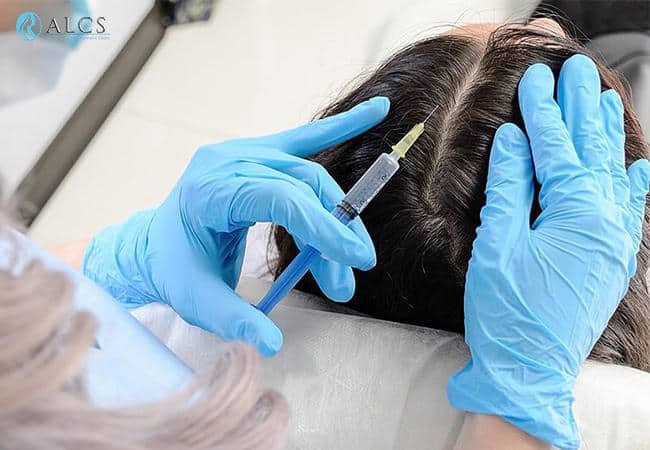
In a PRP Hair transplant, the doctor spins the patient’s blood sample using a centrifuge machine to separate the platelets from RBCs and WBCs. Platelets are then extracted using injection and mixed with the plasma of the blood. The PRP treatment is based on platelet-rich protein cells and carries loads of proteins and growth mediums, which are a crucial part of the healing process. That’s why it is administered for hair loss.

Since the platelet-rich plasma presumably increases the collagen and stem cells, hair loss treatments are pretty positive. It can restore the hair and repair the follicles for better growth of new hair. Anyone can avail of the PRP hair transplant in Jaipur with excellent doctors and state of the art facilities of ALCS India. 

How Do Platelet-Rich Plasma Injections Work?

After the RBCs and WBCs are segregated from the plasma using a centrifuge, the only remaining is platelets. So, the plasma (rich in platelets) is injected into the scalp through the hair follicles. The doctor administers these injections every half inch over the bald areas of the scalp very carefully. There are, however, some things to keep in mind during this treatment,

  • The hair must be shampooed and conditioned before the therapy starts because PRP hair treatment success rate is often dependent on a clean and sterile environment for the injections. 
  • There could be fatigue and weakness resulting from this treatment, so a healthy and balanced diet in addition to staying hydrated is a must.
  • You can go about with your daily routine unless there is irritation or pain.
  • Hair washes and shampoo can be done unless there is irritation in the injection administered area.

You may feel some prick during blood collection and injection delivery. Also, some redness and swelling might be noticeable around the eyes and forehead, which goes off in a couple of days. But since it is an entirely non-surgical process, there are practically no side effects.

What Is The Success Rate Of PRP Hair Transplant?

When talking about PRP Hair Transplant, as with any treatment, the first thing that comes to mind is “what is the success rate?”. PRP Hair treatment success rate depends on various factors.

As with any other treatment, it depends on the patient’s immune system, how their body reacts to the treatment. Generally, to attain the best PRP Hair treatment success rate, two to three sittings are required with a specific gap in between. Modifications are done in each sitting according to how the patient’s body responds to the treatment. 

However, the PRP should not be observed as a self-sufficient treatment. PRP Hair treatment success rate has been around 70% to 90% when used alongside some oral medications and topicals like creams and ointments. 

Does It Really Work?

In a journal named Aesthetic Plastic Surgery, a team of experts and researchers published the findings from their successful PRP treatment. According to the results of this publication, the hair density and thickness after the PRP treatment had shown remarkable growth.

Although, PRP might not be able to resolve some underlying reason for hair loss. Consulting a Dermatologist is the best option in that case. 

PRP hair treatment success rate is equally suitable for both men and women. The PRP treatment can be given to anybody between the ages of 18 and 72 years.

If you would like to consult an expert, visit the ALCS India website or visit our facility in Jaipur.

Considering a Hair Transplant? Remember These Tips

Hair loss is a common problem seen in many people. It not only affects the appearance of a person, but also the overall personality and self-confidence of an individual. Moreover, it causes a negative psychological impact on the person.

Hair transplant has come a long way since its inception in terms of the technique and equipment used for the procedure. The chances of a successful hair transplant are higher when the procedure is performed by an experienced and skilled surgeon.

Tips for Hair Transplant

Hair transplant surgery is arguably the best treatment for male or female pattern baldness. Here are a few tips one needs to know before undergoing the procedure:

-What is the cause of hair loss?

It is essential to know the cause of your hair loss for the right treatment procedure for you. In cases of hormonal imbalances, thyroid-related disorders, or due to the intake of certain medications hair loss may take place. In such cases, the treatment of the medical condition can cure your hair loss problem.

The most common cause of hair loss is genetics. In the case of pattern baldness due to genetics, also known as Androgenic Alopecia, hair transplant surgery is the best form of treatment.

-Considering your need

Hair transplant surgery is an elective cosmetic procedure. Since hair loss is not a fatal condition or a medical emergency, it is an individual’s choice whether to opt for the surgery or not. You can discuss with your doctor about the various treatment options and choose the kind of procedure you want to undergo. 

-Consider the age factor

Age plays an important role in the determination of hair loss pattern. Patients under the age of 25 are usually given medical treatment and medications for the treatment of hair loss rather than a hair transplant surgery.

-Considering other alternative treatments

There are a few medications that may help in the treatment of hair loss. Many surgeons prescribe these medications to patients with hair loss and offer the invasive hair transplant surgery only as the last resort of treatment for hair loss when all the other methods fail.

-Cost of hair transplant surgery

The cost of hair transplant surgery is an important factor to consider, before opting for the procedure. The cost varies according to the expertise of the surgeon and the locality of the clinic. An experienced surgeon may charge more, but, is also more likely to deliver the desired results.

-Decide on the technique

A hair transplant can be performed using the FUE or FUT technique. The hybrid hair transplant technique has also become quite popular of late. One must discuss with his/her surgeon which type of technique is best suited for their case.

-Choice of surgeon

It is of utmost importance to choose an experienced and skilled surgeon. An experienced surgeon will discuss in detail the various treatment options viable for hair loss, and detailed after-care instructions and follow-ups. More importantly, an experienced surgeon is more likely to perform a successful hair transplant surgery and give promising results.

-Know about the risks

Like every surgical procedure, hair transplant surgery also has its risks and complications. One can inquire from their surgeon about the possible risks associated with the procedure. Likewise, you can search online or speak to people who have undergone the procedure before about the complications associated with the procedure to prepare yourself better for the surgery.

-Know about the recovery period and success rate

One should ask their surgeon about the safety of the hair transplant procedure, the recovery period of the procedure, and the pros and cons along with the success rate of the procedure chosen during the consultation.

-Following all the aftercare instructions

Your doctor will provide you with aftercare instructions after the hair transplant procedure. It is important to follow all the instructions well to prevent any complications, and for a smooth recovery in a short time. The instructions will include information about your exercise, diet, and lifestyle. 

Why choose us?

The ALCS clinic in Jaipur provides you with the best hair transplant procedure at an affordable cost. 

Our surgeon, Dr. Sunil Arora is experienced and has performed several successful hair transplant procedures to date.

We have a well-trained staff who ensure you of a comfortable and painless procedure.

If you are looking for a hair transplant procedure, book an appointment with ALCS Clinic, Jaipur today.

हेयर ट्रांसप्लांट के बाद क्या करे ?

अभी हाल फिलहाल में हेयर ट्रांसप्लांट सर्जरी उन लोगों के लिए एक बेहद लोकप्रिय विकल्प बन गई है जो कि बालों के झड़ने की समस्या का सामना कर रहे हैं। साथ ही यह एक ऐसी तकनीक है जो बालों और आत्मविश्वास दोनों को ही बेहद आसानी से बहाल कर सकती है। हालाँकि, हेयर ट्रांसप्लांट की सफलता सर्जिकल उपचार के साथ ही समाप्त नहीं हो जाती है।

इससे जुड़ा सर्वोत्तम परिणाम प्राप्त करने के लिए उचित पोस्ट-ऑपरेटिव देखभाल बेहद महत्वपूर्ण हो जाता है। इस लेख में यह बताया गया है कि यहाँ हेयर ट्रांसप्लांट के बाद क्या करना है, इस पर एक संपूर्ण मार्गदर्शिका भी इसमें दी गई है ताकि आप सबसे प्रभावी परिणाम प्राप्त करते हुए इसके रिकवरी चरण से सफलता पूर्वक निकल सकें।

ऑपरेशन के तुरंत बाद की रिकवरी : आइए अब हम आपको बताते हैं कि हेयर ट्रांसप्लांट के बाद आपको क्या करना है? हेयर ट्रांसप्लांट के बाद, डॉक्टर सामान्य तौर पर मरीज को घर ले जाने की सलाह देते हैं। हेयर ट्रांसप्लांट सर्जरी के लिए लंबे समय तक एनेस्थीसिया की भी आवश्यकता नहीं होती है, लेकिन अगर आपको बेहोश कर दिया गया है, तो भी आप इसके बाद गाड़ी चलाने से बचें।

आराम के साथ-साथ रिकवरी : आप अपने हेयर ट्रांसप्लांट के बाद पहले कुछ दिनों के लिए ही सही, आपको आराम ही करना चाहिए। आप ऐसे किसी भी कार्य या गतिविधियों से बचें जो कि स्कैल्प में रक्त के प्रवाह को भी बढ़ाने का काम करती हैं, क्योंकि इससे रक्तस्राव भी हो सकता है या इसमें ग्राफ्ट भी निकल सकते हैं। सूजन को कम करने के लिए आप आराम करते समय अपने सिर को ऊपर की तरफ ही उठाएँ।

उचित दवा का सेवन : अगर आपके डॉक्टर संक्रमण को रोकने के लिए एंटीबायोटिक्स, दर्द और बेचैनी के लिए दर्द निवारक दवाएँ और साथ ही सूजन को कम करने के लिए सूजनरोधी दवाएँ लिखते हैं तो आप उन्हें नियमित तौर पर जरूर लें। जल्दी से ठीक होने के लिए डॉक्टर द्वारा बताई गई खुराक का भी आप ध्यानपूर्वक पालन करें।

डीहाइड्रेशन और भोजन : आपको ठीक होने के लिए हाइड्रेटेड रहना बहुत ज़रूरी हो जाता है। शरीर की विभिन्न उपचार प्रक्रियाओं में मदद करने के लिए ढेर सारा पानी पिएँ और साथ ही विटामिन और खनिजों से भरपूर संतुलित आहार का सेवन करें। प्रोटीन, विटामिन ए, सी और ई, साथ ही जिंक से भरपूर खाद्य पदार्थ बालों के स्वास्थ्य के लिए बहुत ही अच्छे होते हैं।

हल्के- हल्के हाथों से सफाई : आपका सर्जन आपके स्कैल्प की सफाई के लिए विशेष आपको कई विशेष निर्देश देगा। आमतौर पर यह  कहा जाता है कि आपको सर्जरी के बाद पहले के 48 घंटों तक अपने बाल नहीं धोने चाहिए। उसके बाद, एक सॉफ्ट, बिना खुशबू वाला शैम्पू इस्तेमाल करें और अपने स्कैल्प को रगड़ने या फिर खरोंचने से बचें। अपने बालों को एक सौम्य तौलिये से थपथपाकर सुखाएँ।

बालों के उत्पादों से परहेज़ करें : कम से कम दो हफ़्तों तक, जैल, स्प्रे या कंडीशनर जैसे किसी भी हेयर प्रोडक्ट का इस्तेमाल करने से बचें क्योंकि ये स्कैल्प को बेहद अधिक परेशान कर सकते हैं और साथ ही उपचार प्रक्रिया को भी बाधित कर सकते हैं।

स्कैल्प की सुरक्षा का ध्यान रखें : आपको अपने स्कैल्प को सीधी धूप से बचाना बहुत ज़रूरी है। अगर आपको बाहर जाना ही है तो फिर ढीली और साफ टोपी पहनें। इससे सनबर्न से बचने में मदद मिलती है और साथ ही ग्राफ्ट के क्षतिग्रस्त होने की संभावना कम हो जाती है।

शारीरिक परिश्रम से बचें : आप कम से कम दो सप्ताह तक, भारी वजन उठाने और साथ ही कठोर व्यायाम जैसी कई शारीरिक गतिविधि से बचें। अत्यधिक पसीना आने से स्कैल्प में जलन भी हो सकती है और साथ ही संक्रमण की संभावना भी बढ़ सकती है।

धूम्रपान और शराब पीने से बचें : यह देखा गया है कि धूम्रपान और शराब पीने से उपचार की यह प्रक्रिया धीमी हो सकती है। निकोटीन ब्लड वेसल्स को संकुचित करने का काम करता है, जिससे कि स्कैल्प में रक्त का प्रवाह सीमित हो जाता है, लेकिन शराब डिहाइड्रेशन और अत्यधिक रक्तस्राव का भी कारण बन सकती है।

नींद की स्थिति में भी ध्यान रखें। : सूजन कम करने के लिए पहले आप हफ़्ते भर सिर ऊपर करके ही सोएँ। अपने सिर को अपने दिल से ऊपर रखने के लिए कई तकिए या खीर रिक्लाइनर का इस्तेमाल कर सकते हैं।

साइड इफ़ेक्ट की निगरानी करें और उसका प्रबंधन करें : बाल प्रत्यारोपण के बाद आप कुछ साइड इफेक्ट्स का होना आम बात है, जबकि आपकी स्कैल्प ठीक हो रही होती है और एडजस्ट भी हो रही होती है। इन परिणामों को समझना और नियंत्रित करना एक रिकवरी और साथ ही इष्टतम परिणामों के लिए बेहद महत्वपूर्ण है।

सूजन की समस्या : माथे और आँखों पर सूजन का होना बेहद आम बात है। आइस पैक (साफ़ तौलिये में लपेटे हुए) ट्रांसप्लांट क्षेत्र के बजाय माथे पर लगाने से सूजन को कम करने में काफी अधिक मदद मिल सकती हैं।

खुजली और पपड़ी का होना : जब आपका स्कैल्प ठीक हो रहा होता है, तब खुजली होना बेहद स्वाभाविक है। खुजलाने से बचें, क्योंकि खुजलाने से ग्राफ्ट निकल सकते हैं। पपड़ी बनना इस उपचार प्रक्रिया का एक बेहद सामान्य सा हिस्सा है। बढ़ते बालों के रोम के बचाव के लिए पपड़ी को स्वाभाविक रूप से अपने आप गिरने दें।

झड़ने का विभिन्न चरण : अगर आपके प्रत्यारोपित बाल पहले कुछ हफ़्तों के दौरान निकलते हैं, तो फिर घबराएँ नहीं। यह बाल के विकास चक्र का एक अपरिहार्य हिस्सा ही है। कुछ महीनों के भीतर आपके नए बाल उगने शुरू हो जाने जायेंगे।

फॉलो-अप अपॉइंटमेंट : अपने सर्जन के साथ आपका नियमित फॉलो-अप सेशन महत्वपूर्ण हैं। ये अपॉइंटमेंट आपके डॉक्टर को आपकी प्रगति को ट्रैक करने, किसी भी समस्या का समाधान करने और साथ ही यह सुनिश्चित करने की अनुमति देते हैं कि ग्राफ्ट ठीक से ठीक हो गए हैं। किसी भी अतिरिक्त उपचार या दवाओं के लिए अपने सर्जन की सिफारिशों का पालन जरूर करें।

दीर्घकालिक देखभाल योजना क्या होनी चाहिए?

बाल का देखभाल होना चाहिए दिनचर्या का हिस्सा : एक बार जब उपचार की प्रक्रिया पूरी हो जाती है, तो फिर एक बाल देखभाल का कार्यक्रम जरूर शुरू करन चाहिए।  बालों में सॉफ्ट शैंपू और कंडीशनर का उपयोग करना चाहिए, और साथ ही अत्यधिक गर्मी स्टाइलिंग और कठोर रासायनिक उपचार से बचना चाहिए।

पोषण संबंधी सहायता : आप संतुलित आहार के साथ साथ अपने बालों के स्वास्थ्य को भी बनाए रखें। अपने डॉक्टर से बात करने के बाद बालों के विकास के लिए विशेष रूप से डिज़ाइन किए गए बायोटिन, ओमेगा-3 फैटी एसिड और विटामिन लेने पर विचार करें और उनका नियमित सेवन करें।

तनाव का  प्रबंधन है जरूरी : तनाव बालों के विकास को काफी हद तक बाधित कर सकता है। साथ ही यह सामान्य स्वास्थ्य और अच्छे बाल विकास को बेहतर बनाने के लिए योग, ध्यान या नियमित व्यायाम जैसे तनाव-मुक्ति विधियों को भी अपनी दिनचर्या में आपको शामिल करना चाहिए।

परिणामों के लिए टाइम लाइन को समझना : बाल प्रत्यारोपण के बाद धैर्य रखना बेहद आवश्यक है।  इसके कुछ शुरुआती विकास कुछ महीनों में देखे जा सकते हैं, पूरे प्रभाव को स्पष्ट होने में आमतौर पर 12-18 महीने लगते हैं। सर्वोत्तम परिणाम प्राप्त करने के लिए, धैर्य रखें और अपने सर्जन की सलाह जरूर सुनें।

एक बार जब आपका हेयर ट्रांसप्लांट का काम पूरा हो जाता है और आप क्लिनिक छोड़ देते हैं, तब भी आपको अपने बालों की देखभाल के लिए डॉक्टर या फिर सर्जन की आवश्यकता होती है क्योंकि केवल एक डॉक्टर ही आपको बता सकता है कि हेयर ट्रांसप्लांट के बाद आपको क्या करना है।

हेयर ट्रांसप्लांट के बाद बालों को पूरी तरह से ठीक होने और प्राकृतिक रूप से नए बाल उगने में 2-3 महीने का समय लग सकता है। आप यह ध्यान रखें कि परिणाम और रिकवरी का समय हर व्यक्ति में अलग-अलग हो सकता है। यह व्यक्ति की क्षमताओं पर निर्भर करता है।

अगर बालों को दोबारा उगने में ज़्यादा समय लग रहा है, तो फिर इसका मतलब यह बिल्कुल नहीं है कि सर्जरी ठीक से नहीं हुई या फिर परिणाम अच्छे नहीं थे।

डॉक्टर से सलाह कब लें?

हालाँकि इसमें समस्यायों का होना बेहद दुर्लभ हैं, लेकिन उन लक्षणों के बारे में आपको पता होना ज़रूरी है जो कि किसी समस्या का संकेत देता हैं। अगर आपको निम्न में से कोई भी समस्या है, तो डॉक्टर से मदद जरूर लें:

  • गंभीर और लगातार दर्द या सूजन
  • संक्रमण के लक्षणों में लालिमा और मवाद का होना।
  • ट्रांसप्लांट वाली जगह पर अत्यधिक ब्लीडिंग होना
  • पर्चे पर लिखी दवाओं से एलर्जी

हेयर ट्रांसप्लांट आपके लुक और आत्मसम्मान को काफ़ी हद तक बढ़ा सकता है, लेकिन प्रक्रिया पूरी होने के साथ ही यह पूरी नहीं हो जाती। सबसे अच्छे संभावित परिणाम प्राप्त करने के लिए आपको उचित पोस्टऑपरेटिव देखभाल बेहद महत्वपूर्ण भूमिका निभाता है। इन नियमों का पालन करके आप अपने सर्जन के साथ लगातार संवाद बनाए रखकर, आप एक सहज रिकवरी भी सुनिश्चित कर सकते हैं और आने वाले कई सालों तक अपने हेयर ट्रांसप्लांट के फ़ायदे उठा सकते हैं।

आप यह याद रखें कि अच्छे परिणाम के लिए धैर्य रखना और बाद की देखभाल संबंधी सिफारिशों का पालन करना महत्वपूर्ण है। डॉ. सुनील अरोड़ा, जो कि अंतरराष्ट्रीय स्तर पर प्रशंसित कॉस्मेटिक सर्जन हैं, जो बालों की बहाली और साथ ही कॉस्मेटिक सर्जरी में विशेषज्ञता रखते हैं, के नेतृत्व में ALCS हेयर ट्रांसप्लांट और कॉस्मेटिक क्लिनिक पर जरूर जाएँ।

अक्सर पूछे जाने वाले प्रश्न (FAQ)

1. मैं ट्रांसप्लांट के बाद अपने बालों को कितनी जल्दी धो सकता हूँ?

आमतौर पर यह देखा जाता है कि आपको सर्जरी के बाद पहले 48 घंटों तक अपने बालों को नहीं धोना चाहिए। उसके बाद, एक हल्के, बिना खुशबू वाले शैम्पू का उपयोग करें और अपने सर्जन के निर्देशों के अनुसार ही धोएँ। इसको लेकर सावधान रहें, और आप अपने स्कैल्प को रगड़ने या फिर खरोंचने से बचें। अपने बालों को एक कोमल तौलिये से सुखाएँ।

2. क्या सर्जरी के बाद प्रत्यारोपित बालों का झड़ना आम बात है?

हाँ, उपचार के बाद पहले कुछ हफ़्तों के भीतर प्रत्यारोपित बालों का झड़ना बेहद आम बात है। यह बालों के विकास चक्र का एक सामान्य सा हिस्सा होता है। आम तौर पर कुछ महीनों के बाद नए बाल उगने लगते हैं, और 12-18 महीने बाद पूरे परिणाम दिखाई देते हैं।

3. अगर मुझे बहुत ज़्यादा दर्द महसूस हो या संक्रमण के लक्षण दिखें तो मुझे क्या करना चाहिए ?

कुछ असुविधा, सूजन और मामूली दुष्प्रभाव का होना बहार आम हैं। लेकिन गंभीर और लंबे समय तक दर्द का होना, महत्वपूर्ण सूजन, लालिमा, मवाद, या संक्रमण के किसी भी लक्षण के बारे में तुरंत डॉक्टर को सूचित किया जाना चाहिए। यदि आपको कोई चिंताजनक लक्षण दिखाई देते हैं, तो तुरंत अपने सर्जन या स्वास्थ्य सेवा व्यवसायी से संपर्क करें।

Techniques vs. Cost: Perspective of Choosing the Hair Transplant

Hair loss is a common problem seen in many people. With an increase in the importance of esthetics and looks, many people are opting for hair transplant surgery to correct their hair growth problem. With an advance in technology and equipment hair transplant has become a comfortable and nearly painless procedure.

With many new techniques emerging for a hair transplant, it can be quite confusing for the patient to choose the right technique. The cost factor also plays an important role.

 Here we are discussing the various techniques and the cost factor for a hair transplant procedure.

Techniques for Hair Transplant

The following are the different techniques used for hair transplant:

1)Follicular Unit Transplant (FUT)

A long strip is harvested from the donor site, which is usually the backside of the scalp, and tiny hair follicles are extracted from the strip. About 500 to 2000 extracted hair follicles are present in one strip. The surgeon will then clean the scalp and give local anesthesia to minimize pain and discomfort. Tiny holes or slits are then made in the scalp using a needle or scalpel. The donor site is then sutured. A scar mark is usually left behind, which can be hidden using hair. The hair is then transplanted to the recipient area of hair loss.

2)Follicular Unit Extraction (FUE)

Follicular Unit Extraction (FUE) is slightly more popular than FUT since it leaves behind inconspicuous and nearly invisible scars.

In this method, the surgeon extracts the hair follicles one by one from the donor site. The donor site is first shaved and local anesthesia is given to numb the area. The hair follicles are then extracted and implanted in the recipient area.

3)Hybrid Hair Transplant (HHT)

A newly introduced method for hair transplantation is the hybrid hair transplant (HHT). In this method, the FUT and FUE techniques are combined. This is done to extract the maximum number of hair follicles for the transplant.

Usually, the FUT and FUE methods are both performed in a single sitting. The results are very natural and it is extremely difficult to differentiate between the transplanted hair and the natural hair.

Factors that influence the cost of Hair Transplant

Several factors affect the hair transplant cost. These factors are:

1)The number of hair grafts required 

More the number of grafts required, the more will be the cost of the procedure. Some clinics charge on a per graft basis, while some clinics charge on a per hair follicle basis. Usually, a single hair graft consists of one to three hair follicles. So make sure that you know how the clinic charges you before undergoing the procedure.

2)The requiring hair transplant

A large bald area will cost you more as compared to a small bald spot.

3)Expertise of the surgeon

An experienced surgeon with more years of practice will charge you more. But, higher charges don’t necessarily mean better results. One must do thorough research before choosing the right surgeon for their treatment.

4) Location of the clinic 

The cost of a hair transplant varies according to the locality of the clinic.

5)The type of technique used

Usually, an FUE technique costs more than a FUT technique as the FUE technique requires more care and precision. The recently introduced HHT technique costs more than both, FUE and FUT techniques.

6)Travelling cost

Some people may choose to undergo the hair transplant procedure in a different city or country. One must keep the travelling cost in mind before opting for the hair transplant procedure.

7)Follow-up visits and unforeseen events

Some clinics will charge you additionally for follow-up visits and in cases of any unforeseen events. One must be prepared to pay the additional cost after the completion of the hair transplant procedure.

Conclusion

For the best hair transplant results, choose an experienced surgeon and a well-established clinic like the ALCS clinic, Jaipur. We have the latest technology and equipment to provide you with a world-class hair transplant procedure.

Our surgeon, Dr. Sunil Arora is extremely experienced and the staff is well-trained to provide you with a comfortable and painless hair transplant procedure.

Book an appointment with ALCS clinic, Jaipur today for your hair loss consultation.